Best Flange Accessories Manufacturer in China?
Choosing the best flange accessories manufacturer in China takes more than comparing prices or polished product photos. Buyers should examine material traceability, dimensional control, production capacity, and how clearly a supplier answers technical questions. A Flange Accessory may look simple on a drawing, yet a small mismatch in dimensions or surface finish can complicate installation. Details matter.
Bolted-joint specialist John H. Bickford’s published work supports a practical principle: “Reliable joints depend on controlled tightening, not guesswork.” This is a paraphrase of his engineering guidance, not a verbatim quotation. It points to an important buying question: can the manufacturer provide consistent product specifications and useful installation information? Ask for evidence, not assurances. For example, request material certificates, inspection records, drawings, and samples that match the intended application.
This guide explores how to compare Chinese manufacturers, assess quality controls, and spot gaps before placing an order. It also considers communication, lead times, customization, and after-sales support. A supplier may offer competitive pricing but still be a poor fit if its documentation is incomplete or its delivery estimates keep shifting. That happens. No checklist removes every risk, and a factory visit may not reveal every production issue. Still, careful questions make decisions more dependable. The aim is not to name a universal winner, but to help buyers identify a capable manufacturer for their specifications, project conditions, and quality requirements.
What Are Flange Accessories and What Purposes Do They Serve?
Best Flange Accessories Manufacturer in China?
What Are Flange Accessories and What Purposes Do They Serve?
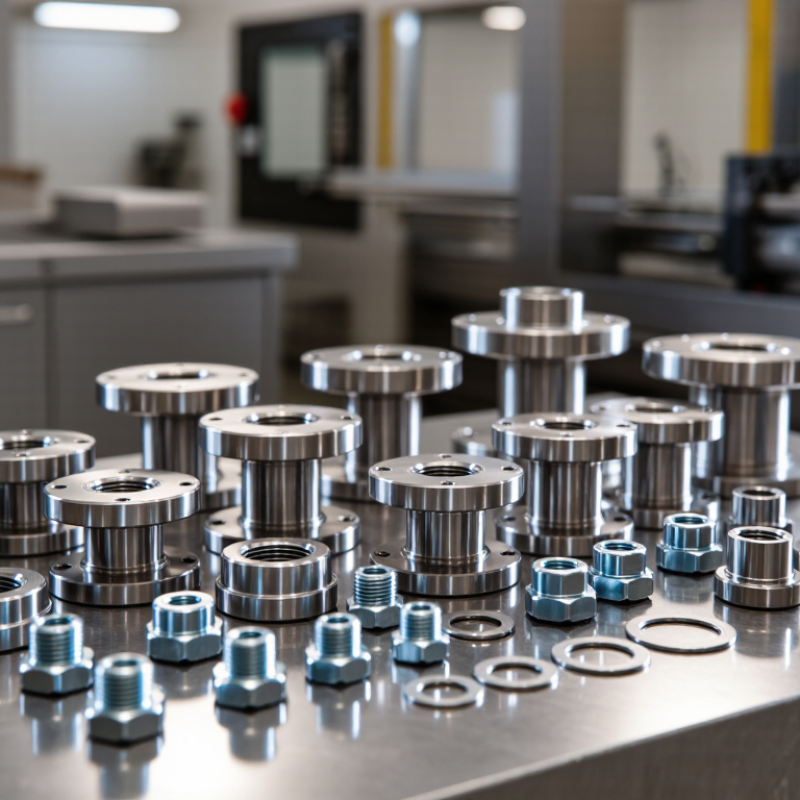
Flange accessories are the small, functional parts that help flanged pipe joints connect, seal, or remain serviceable. Common examples include gaskets, bolts and nuts, blind flanges, spacers, and spectacle blinds. Each has a distinct role: a gasket compresses between raised faces, while bolts provide the clamping force that helps maintain the seal. A blind flange closes an unused line end. Small parts matter. In the field, a damaged gasket or uneven bolt tightening can cause leakage, even when the main flanges appear sound.
The U.S. Energy Information Administration’s Natural Gas Explained: Natural Gas Pipelines describes a network of roughly three million miles of natural gas pipelines in the United States. That scale makes reliable joints and practical maintenance important across pipeline systems. For selection, engineers should check pressure rating, material compatibility, temperature, dimensions, and the applicable standard. ASME B16.5 covers pipe flanges and flanged fittings; gasket selection should also match the joint design and service conditions. Standards help, but they do not replace inspection. I have seen accessory lists treated as minor procurement details; that is not always wise. Confirm dimensions and materials against the actual piping specification before installation.
Common Types of Flange Accessories and Their Applications
Flange accessories help form sealed, maintainable connections in pipelines, pumps, and process equipment. Gaskets sit between flange faces and reduce leakage when surfaces are aligned and bolts are tightened evenly. Common options include fiber, graphite, and spiral-wound metal gaskets. Each performs differently under heat, pressure, and chemical exposure. No single material suits every service. Details matter.
Stud bolts and nuts secure the joint; their dimensions, grades, and coatings should match the equipment specification and operating conditions. Insulation kits use sleeves, washers, and gaskets to electrically separate flange faces, which can help limit galvanic corrosion between dissimilar metals. Small parts. Big consequences. Poor storage or damaged sleeves can undermine an otherwise suitable kit.
Blind flanges close pipe ends, while spectacle blinds support switching between open and blocked flow paths during planned maintenance. Spacers can help accommodate layout needs or provide clearance during equipment changes. Selection should account for flange size, pressure class, facing, temperature, and fluid compatibility. Check dimensions and material records before installation. Field alignment can still reveal problems that drawings missed, so practical fit-up deserves attention.
Materials, Manufacturing Processes, and Quality Standards
Selecting a flange accessories manufacturer in China starts with material traceability, not a polished catalogue. Carbon steel parts may use ASTM A105, while stainless steel components often specify ASTM A182 grades such as F304 or F316. The correct grade depends on pressure, temperature, corrosion exposure, and the mating flange. Ask for material test certificates that match each heat number. Check the chemistry and mechanical properties. Small paperwork gaps matter.
Manufacturing controls matter just as much. Forged parts need documented heating, forming, and heat-treatment records; machining should leave clean sealing faces without deep tool marks. The World Steel Association’s World Steel in Figures 2024 reports 1,892.2 million tonnes of global crude steel production in 2023. That scale shows why a material certificate alone cannot verify a specific component’s quality. Request dimensional inspection results, pressure-test records where applicable, and a clear inspection plan aligned with relevant ASME or ISO requirements. ISO 9001 certification can support process consistency, but it does not guarantee every fitting is defect-free. I would still sample-check critical dimensions. Suppliers sometimes miss details.
How to Evaluate Flange Accessories Manufacturers in China
A reliable flange accessories manufacturer should prove control over materials, dimensions, and testing—not just offer a low quotation. Ask for material test certificates, heat-treatment records, and traceability from each finished part to its steel heat. For gaskets, bolts, and fittings, check drawings, tolerances, pressure ratings, and compatibility with the mating flange. Request recent inspection records and a sample you can measure against the approved drawing.
Data can provide context, but not a supplier verdict. World Steel Association’s World Steel in Figures 2024 reports global crude steel production of 1,892.2 million tonnes in 2023. That scale makes documented material origin and grade checks important. ISO’s Survey 2022 recorded 1,265,216 ISO 9001 certificates worldwide. A certificate can indicate a quality-management system; it does not prove that a specific batch meets your specification. Paperwork is not proof.
During evaluation, ask how the factory handles nonconforming parts, coating thickness checks, and packing that protects machined faces in transit. Request a live video walkthrough of the inspection area, then compare the explanation with actual records. For critical orders, use an independent pre-shipment inspection and agree on acceptance criteria in writing. I would not rely on polished photos alone; they rarely show measurement practice or how rejected parts are controlled. One detail is easy to miss: confirm that the quoted scope includes every washer, gasket, or accessory your assembly needs.
