What is low quantity injection molding and its benefits?
Low quantity injection molding is becoming a vital process in various industries. According to recent industry reports, the demand for small batch production has increased by over 30% in recent years. This trend reflects the need for efficient manufacturing solutions that support product development cycles.
The primary advantage of low quantity injection molding is cost-effectiveness. Producing fewer units reduces overhead costs. Companies can test designs without the burden of large-scale commitments. Additionally, the lead time for molds is often shorter, which accelerates time-to-market. Yet, some challenges remain.
Material selection may be limited, impacting quality. While this process suits many applications, it may not function for every product line. Therefore, understanding its potential drawbacks is crucial. Emerging businesses, in particular, should weigh the benefits carefully against these challenges.
What is Low Quantity Injection Molding?
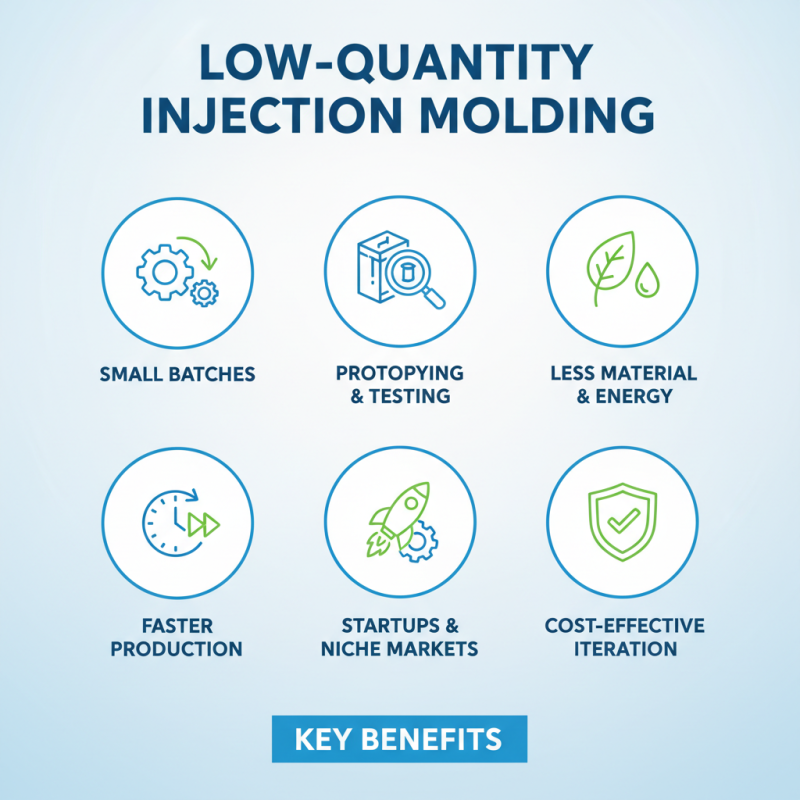
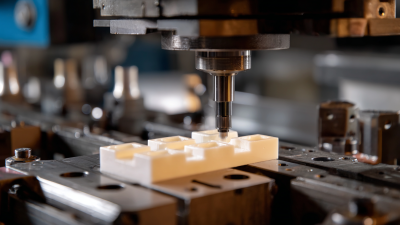
Low quantity injection molding is a specialized manufacturing process for producing small batches of plastic parts. Unlike traditional methods, this approach caters to businesses that need limited runs. It efficiently meets specific design requirements while minimizing waste. The process typically uses less material, which can lower production costs in the long run.
The appeal of low quantity injection molding lies in its flexibility. Designers can quickly prototype their components, allowing for rapid iterations. Each production cycle can be adjusted based on feedback or changing market needs. However, the downside comes with potential quality fluctuations. Small batches may lead to inconsistencies, requiring thorough inspections. This highlights the importance of quality control, even when producing limited quantities.
Moreover, low quantity injection molding can sometimes be less efficient than traditional high-volume methods. With shorter production runs, setup times can take longer relative to output. This aspect can be frustrating for some manufacturers. Despite these challenges, many find that the benefits of flexibility and customization outweigh the drawbacks. Balancing quality and efficiency remains a key area for improvement in this method.
What is Low Quantity Injection Molding and Its Benefits?
This chart illustrates the benefits of low quantity injection molding, highlighting advantages such as prototyping, small production runs, customization, material variety, and cost-effectiveness, with each benefit rated on a scale of 1 to 10.
Advantages of Low Quantity Injection Molding in Manufacturing
Low quantity injection molding is an efficient manufacturing method for smaller production runs. It allows for the creation of precise and complex parts without the need for large-scale production tools. This approach is particularly useful for startups and small businesses. They can test their designs with minimal investment before committing to larger orders. The flexibility of low quantity injection molding is one of its key benefits.
One significant advantage is cost-effectiveness. Producing fewer parts means lower upfront costs for molds and materials. This is ideal for prototypes or limited editions. However, the cost per part may increase as order quantities remain low. Companies must balance their production needs with budget constraints. Another benefit is faster turnaround time. With shorter lead times, manufacturers can quickly respond to market changes or customer demands. This agility makes it easier to stay competitive, but it may challenge quality consistency. Achieving the right balance between speed and quality can be tricky.
Low quantity injection molding also offers design freedom. Engineers can create customized parts that meet specific requirements. This method encourages innovation and experimentation. Yet, the process may lead to unexpected challenges in production. Some designs might not translate well into actual parts. Continuous evaluation and adjustments are necessary. Embracing this iterative process can lead to better final products.
What is low quantity injection molding and its benefits?
| Aspect |
Description |
Benefits |
| Production Volume |
Ideal for small to medium batch production. |
Reduces inventory costs and enables quick market entry. |
| Cost Efficiency |
Lower setup and tooling costs compared to traditional methods. |
Allows companies to invest in innovations without large initial costs. |
| Flexibility |
Easily adapts to design changes and product iterations. |
Encourages rapid prototyping and testing of new products. |
| Material Variety |
Supports a wide range of materials and additives. |
Offers versatility in product characteristics and applications. |
| Quality Control |
Maintains high-quality standards with precise processes. |
Minimizes defects and enhances product reliability. |
Applications of Low Quantity Injection Molding in Various Industries
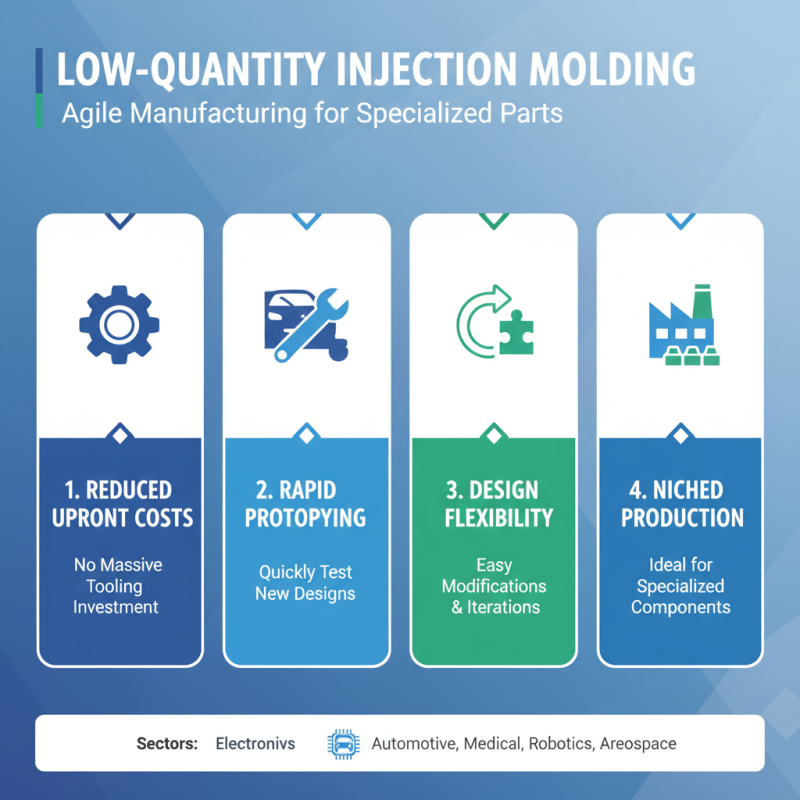
Low quantity injection molding is gaining traction in various sectors. This method suits industries needing small batch production. For instance, the automotive sector often requires specialized parts. These parts can be produced without the massive upfront costs of traditional molding methods. Designers can test new ideas rapidly. It also allows for flexibility in design changes.
In the medical field, low quantity injection molding plays a critical role. Medical devices often require precision and customization. Small-scale production enables manufacturers to meet specific needs without large investments. However, some challenges exist. Maintaining quality across small batches can be difficult. Each batch may show variance, leading to quality control issues.
The technology is also applied in consumer goods. Companies can create limited-edition products or prototypes with ease. They get to gauge market interest before larger runs. But, the initial setup still causes some hesitation. It can lead to resource waste if a product fails to resonate with consumers. Understanding market demand is essential for success.
Cost Efficiency and Time Savings in Low Quantity Injection Molding
Low quantity injection molding is a practical solution for many manufacturers. This method allows companies to produce small batches of parts efficiently. The key advantages of this approach are cost efficiency and time savings. When producing low quantities, traditional methods may lead to higher costs. Low quantity injection molding reduces material waste and machine time.
With fewer parts to create, production cycles shorten significantly. This means businesses can respond quickly to market changes. Companies often face challenges when testing new designs or entering niche markets. Low quantity injection molding helps them do this without large upfront investments. It provides a flexible option for prototyping and limited production.
However, there are potential drawbacks. For example, the initial setup costs can be higher than expected. Some businesses may struggle to find balance between quality and speed. This method may not be suitable for all products. Still, for low volume needs, it often proves to be a smart choice. Embracing this technique can lead to innovation and adaptability in a competitive landscape.