What is Low Quantity Injection Molding and Its Benefits?

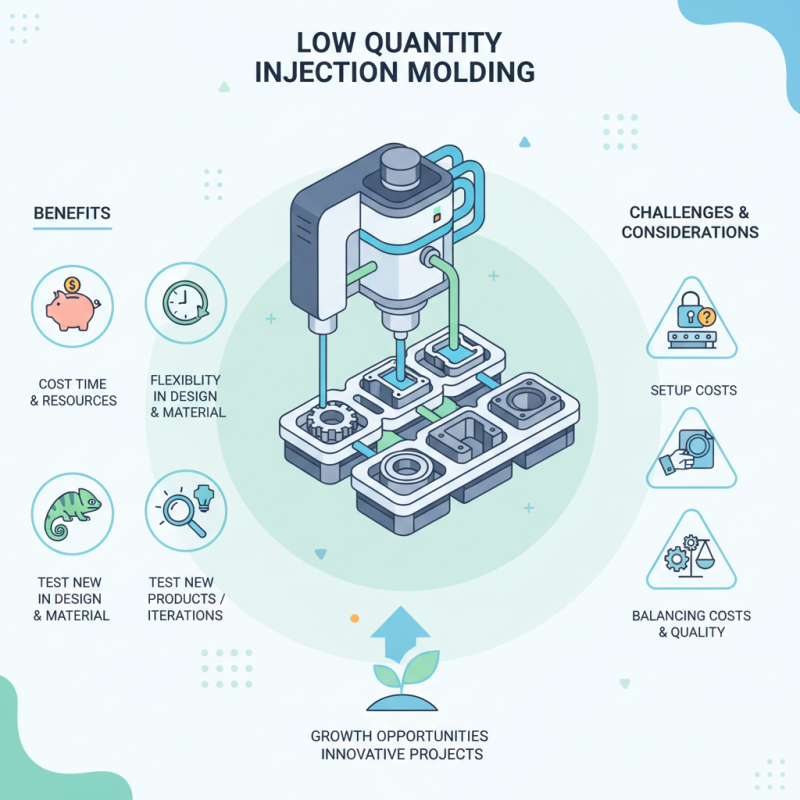
Low quantity injection molding is becoming increasingly popular in various industries. This technique allows manufacturers to produce small batches of parts with precision. It is cost-effective for projects that do not require mass production. Low quantity injection molding saves time and resources.

Many companies are exploring its benefits. The flexibility in design and material choice is appealing. Businesses can test new products without a large investment. It can lead to quicker iterations and better feedback. However, this approach may not suit every scenario. The setup costs can be a hurdle for some.

Despite its advantages, low quantity injection molding presents challenges. Quality control must be prioritized to ensure consistency. Understanding the right applications requires experience. Balancing costs and quality can be tricky. Nonetheless, this method can offer significant growth opportunities for innovative projects.
What is Low Quantity Injection Molding and Its Benefits?

What is Low Quantity Injection Molding?

Low quantity injection molding (LQIM) is a cost-effective manufacturing process tailored for small production runs. This technique allows companies to produce specific parts with minimal investment in tooling. According to industry reports, this approach has gained popularity, especially among startups and businesses testing new products. LQIM can significantly reduce the upfront costs tied to traditional injection molding.

The flexibility of low quantity injection molding facilitates rapid prototyping. Companies can create and test new designs without extensive delays. A study from the Plastic Industry Association indicates that companies using LQIM can reduce time-to-market by up to 40%. This speed is crucial in industries like consumer electronics and automotive, where innovation cycles are short.

LQIM also offers design versatility. Manufacturers can easily modify their molds without incurring high expenses. However, there are challenges. Quality control may vary with lower quantities, leading to potential inconsistencies in the final product. Some reports highlight that 15% of parts produced may require rework or adjustments. Balancing cost and quality remains a vital consideration.

What is Low Quantity Injection Molding and Its Benefits?

Aspect Description
Definition Low Quantity Injection Molding refers to the manufacturing process of producing small volumes of plastic parts using injection molding techniques.
Ideal Use Cases Prototyping, low-volume production runs, and parts for specialized applications.
Benefits Cost-effective for small production runs, quick turnaround times, and easy design modifications.
Materials Can use a variety of thermoplastic materials, including ABS, PC, and Nylon.
Production Time Typically faster than traditional methods due to streamlined processes and reduced setup times.
Applications Used in various industries including automotive, medical devices, and consumer products.
Customization High degree of customization available for unique design requirements.

Key Features of Low Quantity Injection Molding

What is Low Quantity Injection Molding and Its Benefits?

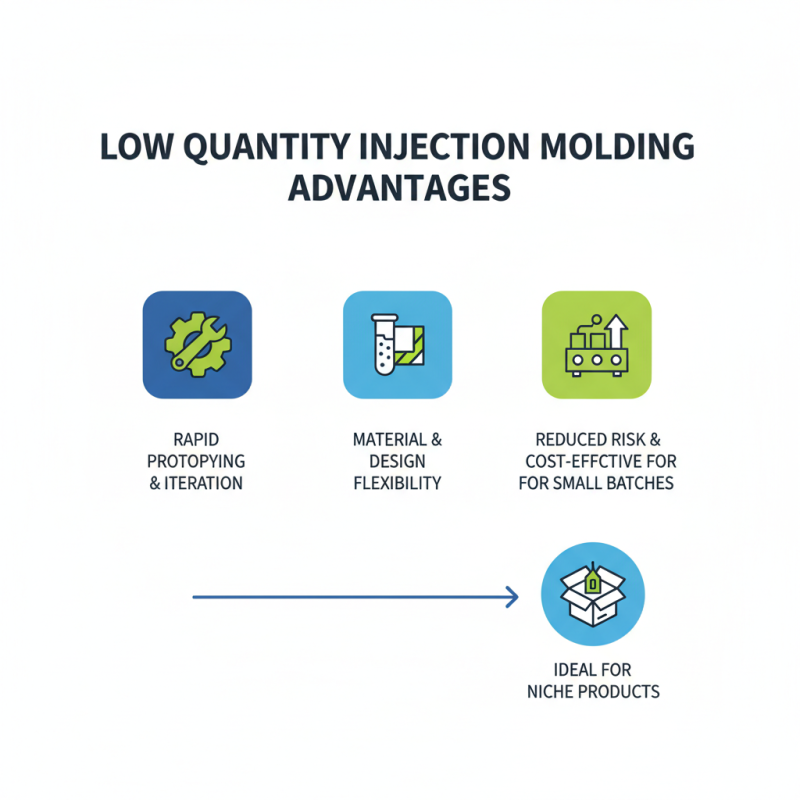
Low quantity injection molding offers unique advantages for small-scale production. This method is ideal for prototypes or niche products. It allows for quick adjustments during the design phase. Manufacturers can test different materials and designs with minimal risk. The flexibility of low quantity injection molding is one of its strongest features.

Precision is vital in low quantity runs. This process ensures high-quality production without the typical mass manufacturing costs. The molds are often simpler and quicker to produce. However, the initial setup can be more complex. Attention to detail is essential. Minor errors can lead to significant issues later.

Cost efficiency also stands out. Unlike traditional molding, there is less waste of materials and resources. Smaller batches mean you only produce what you need. This approach is environmentally friendly as well. Yet, there’s a learning curve to optimize processes. Continuous improvement is necessary to maximize benefits in this area.

Comparative Advantages Over Traditional Injection Molding

What is Low Quantity Injection Molding and Its Benefits?

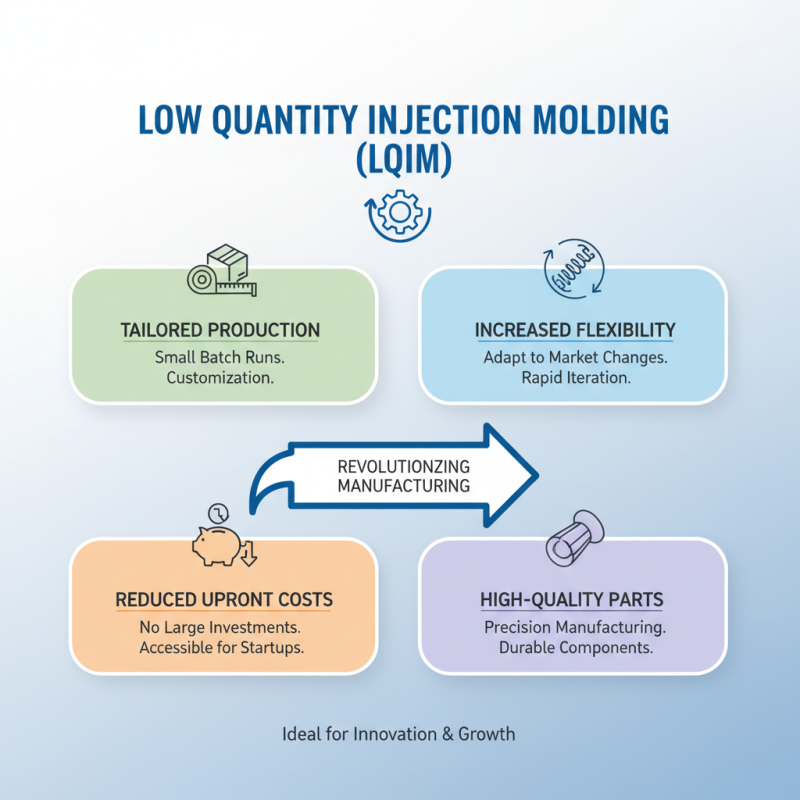
Low Quantity Injection Molding (LQIM) appears to revolutionize the manufacturing landscape. It tailors production for small batch runs. This method suits businesses that need flexibility. Low Quantity Injection Molding reduces upfront costs. It allows startups and small businesses to produce high-quality parts without huge investments.

Compared to traditional methods, LQIM offers comparative advantages. It minimizes waste by using only necessary materials. This leads to cost savings and sustainable practices. Furthermore, lead times are shorter. Prototypes can be developed quickly, allowing for rapid iterations. This agility can be crucial for businesses in fast-moving markets.

**Tip:** When considering LQIM, evaluate your production volume carefully. Calculate the potential savings on material and time.

**Tip:** Always seek feedback on initial designs. Adjusting early can prevent costly changes later. Aim for clarity in specifications to facilitate smoother production.

Applications and Industries That Benefit from Low Quantity Molding

Low quantity injection molding is gaining traction in many industries. It is particularly beneficial for startups and small manufacturers. These businesses often have unique product ideas but lack the resources for large-scale production. This type of molding allows them to test designs and market acceptance without significant commitments.

Automotive, medical, and consumer goods sectors heavily utilize low quantity molding. In automotive, prototypes can be created for testing quickly. This fast iterative process helps in refining designs based on real-world feedback. In the medical field, low quantity molding enables the production of specialized devices tailored to specific patient needs. It allows for quick updates and customizations, supporting innovation in healthcare.

Consumer goods also benefit, especially when testing market trends. Small runs can help gauge interest before large investments. However, challenges exist. The cost per unit can be higher than mass production. Quality control may vary, and risks of defects increase. Businesses need to weigh these factors carefully. Reflecting on these nuances is essential for success in low quantity injection molding.

Cost-Effectiveness and Sustainability of Low Quantity Injection Molding

Low quantity injection molding offers significant cost-effectiveness and sustainability benefits for businesses. This manufacturing approach is ideal for small-scale production. Traditional methods often require large minimum orders, increasing costs. Low quantity options eliminate this barrier. They reduce waste and allow for tailored solutions to meet specific needs.

Switching to low quantity injection molding can lead to better resource allocation. Companies can test products with fewer materials and reduced financial risk. It also allows for easy revisions based on market feedback. The flexibility is a significant advantage in today’s fast-paced environment.

Tips: Consider evaluating your production needs before committing. Look for ways to maximize efficiency in your designs. Focus on sustainable materials that align with your brand's values, fostering eco-friendly practices. Remember, every small step counts toward larger sustainability goals.

Benefits of Low Quantity Injection Molding

This chart illustrates the key benefits of Low Quantity Injection Molding, showcasing their significance in terms of cost-effectiveness, sustainability, lead time reduction, flexibility, and material versatility.