Top Low Volume Injection Moulding Techniques and Benefits?
In the world of manufacturing, low volume injection moulding plays a vital role. Industry expert Dr. Emily Jameson states, “Low volume injection moulding offers precision without the burden of high production costs.” This technique allows companies to produce small quantities of specialized parts effectively. Many businesses overlook its potential benefits, focusing instead on high-volume runs. However, low volume injection moulding can lead to greater innovation and flexibility.
The process is ideal for prototypes and small production runs. It permits rapid iterations, enabling engineers to refine designs quickly. Quality is not compromised; in fact, many high-tech applications utilize this method. Yet, some may question its cost-effectiveness when compared to traditional methods. Reflecting on these concerns can reveal opportunities for improvement in production strategies.
Widespread adoption of low volume injection moulding is still evolving. Companies that embrace it can enjoy reduced lead times and minimized risks. Balancing these advantages with challenges is crucial for success. Recognizing the unique applications of this process can ultimately enhance competitiveness in a crowded marketplace.
Overview of Injection Moulding Techniques for Low Volume Production
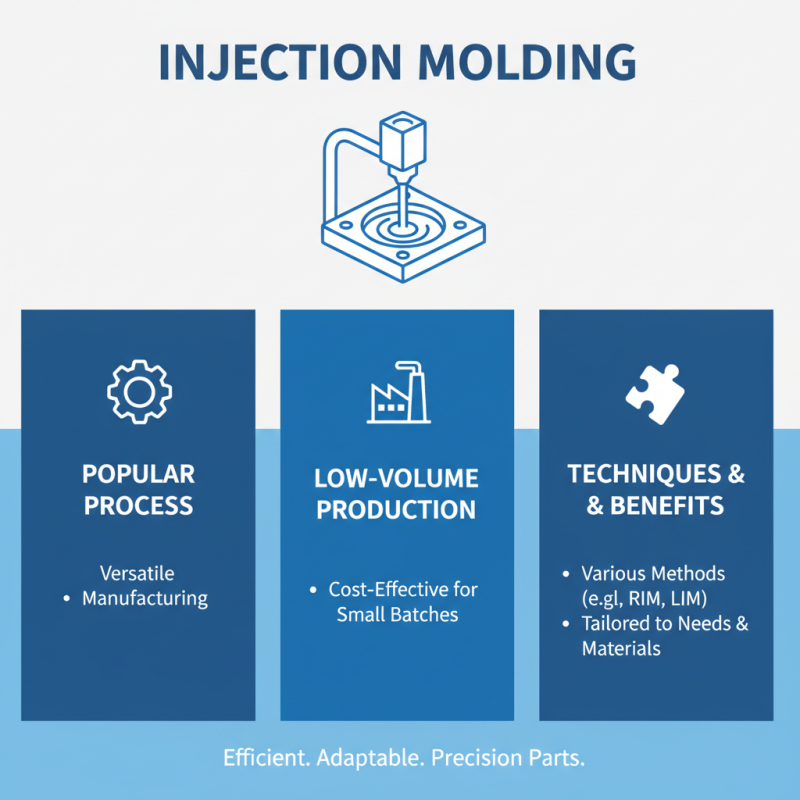
Injection moulding is a popular manufacturing process. It can be effective for low volume production. There are several techniques to consider. Each has its unique benefits and challenges.
One technique is thermoplastic injection moulding. It allows for quick setup and fast cycle times. This method is ideal for producing intricate designs. However, precision is crucial. Small errors can lead to defects in the final product. Another option is silicone injection moulding. This technique is perfect for parts needing flexibility. It works well with low volumes but can be costly.
Pressure injection moulding is another interesting method. It uses high pressure to fill the mould. This leads to detailed parts, but it requires careful engineering. It's not as forgiving with mistakes. The right choice depends on the project requirements. Each technique has its pros and cons. Understanding these can help in making an informed decision.
Key Benefits of Low Volume Injection Moulding for Manufacturers
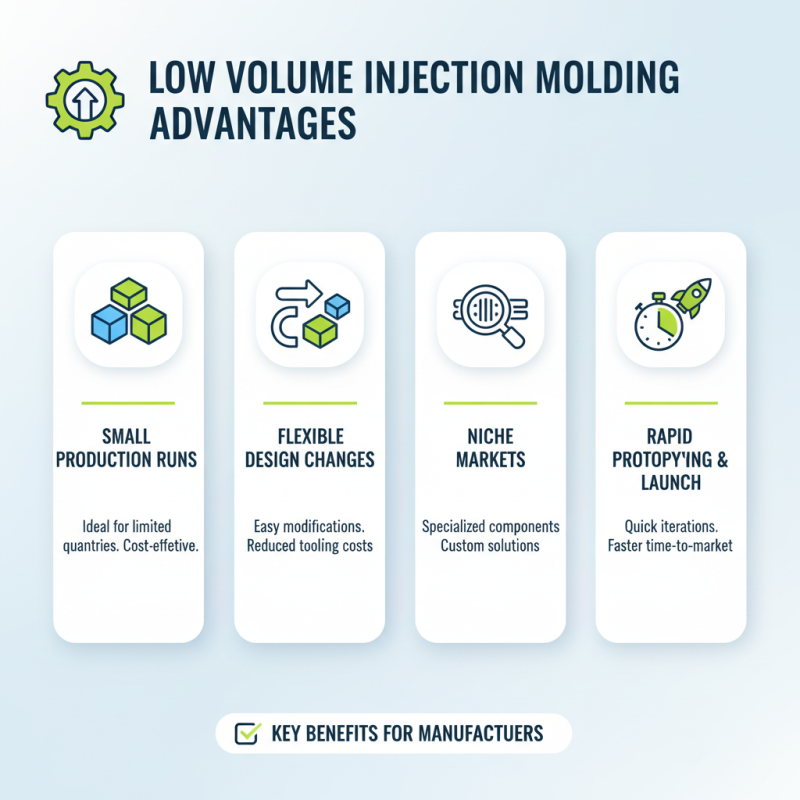
Low volume injection moulding offers significant advantages for manufacturers. This process is ideal for small production runs, providing flexibility in design changes without high costs. It caters to niche markets that require specialized components. Manufacturers can develop prototypes quickly, getting products to market faster.
One of the key benefits is reduced tooling costs. Traditional moulding requires expensive moulds, but low volume techniques often use less complex designs. This reduction opens doors for startups. They can innovate without overextending their budgets. Quality can still be maintained, ensuring that products meet industry standards.
**Tip:** Consider using digital technologies for mould design. This can streamline the process and minimize errors.
Another benefit lies in the material choices. Low volume injection allows for experimentation with different plastics. Manufacturers can assess which materials work best without committing to large quantities.
**Tip:** Keep an eye on the selected materials’ availability and cost trends. Market changes can impact your product's bottom line.
As manufacturers look to optimize their production lines, these benefits make low volume injection moulding an appealing choice. Each project can provide insights that refine future processes.
Comparison of Leading Low Volume Injection Moulding Methods
When it comes to low volume injection moulding, various techniques exist, each with unique benefits. Two popular methods are silicone moulding and 3D-printed moulding. Silicone moulding allows for intricate designs and is suitable for complex shapes. It also has lower material costs.
3D-printed moulds, however, can be produced quickly, reducing lead times significantly. This method is ideal for rapid prototyping.
While these methods offer advantages, there are downsides to consider. Silicone moulds, for instance, may not withstand high production cycles. Their lifespan is limited, making them less desirable for larger quantities. On the other hand, 3D-printed moulds can struggle with accuracy and surface finish. The choice of method often depends on specific project needs.
Sometimes, companies find themselves juggling between techniques, searching for the best fit. Balancing speed, cost, and quality is a continuous challenge in low volume injection moulding.
Critical Factors to Consider When Choosing a Low Volume Technique
When selecting a low volume injection molding technique, several critical factors come into play. The
material choice is paramount. Certain polymers work well with low volume production. Others may cause issues during the molding process. Think about the application and desired properties of the final product. Not all materials are equal.
Another key consideration is the design complexity. Intricate designs may require advanced molds that can increase costs. Simple shapes are often more cost-effective. It’s important to strike a balance between design needs and budget constraints. Sometimes, the ideal design becomes impractical during production.
Production time is also crucial. Some techniques allow for quicker turnaround than others. This is vital for projects with tight deadlines. Evaluate if the speed meets your project needs. Remember, efficiency should not compromise quality. Exploring each technique's advantages and limitations will help in making an informed decision.
Case Studies Illustrating Successful Low Volume Injection Moulding Applications
Low volume injection moulding is revolutionizing how industries manufacture parts. For example, a small electronics firm needed custom housings. Their previous methods were slow and costly. By switching to low volume injection moulding, they shortened production time significantly. The result was a more agile approach to meeting customer demands.
Another case involved a startup aiming to produce medical devices. They faced tight regulations and high costs. Using low volume injection moulding, they created prototypes quickly. This led to valuable feedback and product refinement. However, not everything went smoothly. They faced challenges in material consistency, which delayed some releases. Learning from these issues, they adjusted their processes to improve quality.
These examples illustrate the benefits and lessons learned in low volume injection moulding. Innovative companies are finding great value in these techniques. Yet, there remains room for reflection on how to enhance efficiencies further. Continuous improvement is key in this evolving field.
Top Low Volume Injection Moulding Techniques and Benefits
This bar chart illustrates the number of successful cases for various low volume injection moulding techniques. The data highlights the effectiveness and application range of each technique, showcasing their potential benefits in real-world scenarios.