2026 Best Plastic Manufacturing Suppliers for Global Buyers

Choosing the right plastic manufacturing supplier can shape product quality, costs, delivery reliability, and long-term market trust.

For global buyers, a polished website is not enough. Factory evidence matters more. Look for documented processes, trained engineers, stable equipment, and transparent quality records. A capable supplier should explain resin selection, mold design, injection parameters, cooling control, and inspection methods in practical terms.

John Bozzelli, a respected injection molding consultant and founder of RJG, has often emphasized, “If you can’t measure it, you can’t control it.” That principle remains highly relevant. Reliable suppliers measure melt temperature, cycle time, part weight, dimensional variation, and defect rates. They also keep traceable batch records, from incoming pellets to packed components.

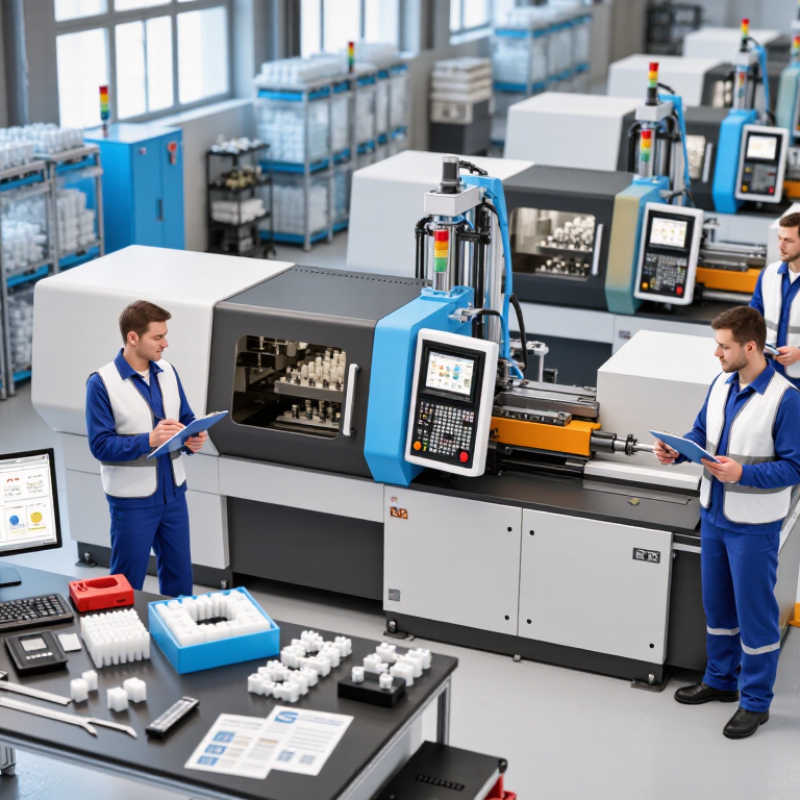
Walk the factory floor, when possible. Observe material storage, machine maintenance, and how operators handle rejected parts. Ask for sample reports, not promises. Confirm testing capabilities for tensile strength, impact resistance, appearance, and environmental performance. Certifications can support trust, but they do not replace direct verification.

The best partner is not always the cheapest. A low quotation may hide weak tooling support, unstable output, or expensive corrective work later. Still, supplier evaluations are rarely perfect. Buyers can overvalue certifications, underestimate communication gaps, or approve samples too quickly. That deserves reflection.

This guide examines leading plastic manufacturing suppliers for global buyers in 2026. It considers technical capability, production scale, quality systems, customization, sustainability practices, communication, and total purchasing risk. The goal is practical comparison, not empty rankings. Supplier performance can change, so every shortlist should be checked against current evidence.
2026 Best Plastic Manufacturing Suppliers for Global Buyers

Plastic Manufacturing Suppliers: Industry Scope and Buyer Requirements

2026 Best Plastic Manufacturing Suppliers for Global Buyers

Plastic manufacturing spans packaging, automotive parts, electronics housings, construction products, and medical components. The OECD Global Plastics Outlook reports that global plastic production reached 460 million tonnes in 2019. Plastic waste reached 353 million tonnes, while only 9% was recycled. These figures make supplier selection a production and environmental decision.

Global buyers should examine process capability, not just quoted prices. Ask for mold-flow analysis, dimensional inspection records, resin certificates, and batch traceability. Injection molding suits detailed parts, while extrusion supports continuous profiles and films. Blow molding remains practical for hollow containers. A capable supplier should explain cycle time, tolerance limits, tooling ownership, and realistic annual capacity in plain language.

Compliance also needs evidence. Depending on the market, buyers may request ISO 9001 quality systems, ISO 14001 environmental controls, REACH or RoHS declarations, and material safety documentation. Recycled content claims should include verifiable mass-balance or chain-of-custody records. A low unit price can still be expensive. Freight damage, unstable color, and late tooling corrections quickly erase savings. One difficult truth: supplier audits often reveal that impressive sustainability claims lack consistent production data. Buyers should check factory samples, measure critical dimensions independently, and review corrective-action history before signing long-term agreements.

2026 Best Plastic Manufacturing Suppliers for Global Buyers - Plastic Manufacturing Suppliers: Industry Scope and Buyer Requirements

Comparative industry guide using supplier capabilities, common plastic processes, buyer requirements, and typical commercial ranges.

Supplier Capability Category Typical Materials Common Manufacturing Processes Typical Production Volume Typical Lead Time Typical Dimensional Capability Common Buyer Applications Key Buyer Requirements
Injection Molding PP, ABS, PC, PA, POM, TPE, TPU Thermoplastic injection molding, insert molding, overmolding From several hundred to millions of parts annually 4–12 weeks after design approval; tooling may require additional time Commonly around ±0.10–0.30 mm, depending on material, geometry, and tool design Consumer products, automotive components, electrical housings, medical disposables CAD files, resin grade, annual volume, cosmetic standard, inspection plan, mold ownership terms
Blow Molding HDPE, LDPE, PET, PP, PVC Extrusion blow molding, injection blow molding, stretch blow molding Thousands to millions of containers annually 5–14 weeks, including container tooling and validation Wall-thickness variation is generally more critical than tight linear tolerances Bottles, jerrycans, drums, fluid reservoirs, household packaging Capacity, drop resistance, leak testing, barrier needs, closure compatibility, food-contact documentation where applicable
Extrusion and Profile Manufacturing PVC, PE, PP, ABS, TPU, TPE Sheet extrusion, film extrusion, pipe extrusion, profile extrusion Continuous production from hundreds of kilograms to large industrial runs 3–10 weeks, depending on die and material availability Usually controlled by profile, thickness, ovality, and cut-length specifications Tubing, seals, window profiles, protective films, sheets, cable insulation Cross-section drawings, dimensional tolerances, surface finish, coil or cut-length requirements, compound data
Rotational Molding LLDPE, HDPE, PVC plastisol, nylon compounds Rotomolding with powder or liquid resin systems Low to medium volumes; commonly suited to large hollow parts 6–14 weeks, depending on mold construction and finishing Generally looser tolerances than precision injection molding; wall thickness must be validated Tanks, bins, kayaks, playground components, industrial containers Impact resistance, UV stability, drain design, wall thickness, dimensional stability, outdoor-life expectations
Thermoforming PETG, ABS, HIPS, PP, PVC, PC, PLA Vacuum forming, pressure forming, twin-sheet forming Prototype, short-run, and medium-volume production 3–8 weeks after tool or pattern approval Affected by material draw ratio, sheet thickness, mold temperature, and trimming method Trays, covers, equipment enclosures, retail packaging, interior components Sheet thickness, draw depth, trim profile, surface appearance, part nesting, recyclable-material targets
CNC Plastic Machining POM, PA, PEEK, PTFE, PC, PMMA, UHMW-PE CNC milling, turning, drilling, routing Prototype to low and medium production volumes 3–15 business days for standard parts; longer for complex assemblies Often capable of tighter tolerances than molding, subject to material and machine setup Engineering prototypes, bushings, fixtures, gears, laboratory components 3D CAD, critical dimensions, surface-finish requirements, material certificates, deburring standards
Plastic Compounding and Custom Formulation Engineering polymers, recycled resins, glass-filled and mineral-filled compounds Twin-screw compounding, color matching, additive blending, pelletizing Pilot batches to continuous industrial supply 4–12 weeks for development; recurring supply depends on batch planning Performance is defined by material specifications rather than part tolerances Automotive, electronics, appliances, industrial equipment, sustainable packaging Mechanical targets, color standard, recycled content, flame rating, regulatory declarations, batch consistency
Recycled Plastic Processing Recycled PP, PE, PET, ABS, PS, and mixed post-industrial streams Sorting, washing, shredding, regrinding, re-pelletizing, compounding Batch or continuous production, depending on feedstock and quality controls 4–10 weeks after feedstock and specification approval Variation control is typically the main technical consideration Packaging, consumer goods, non-critical automotive and industrial parts Recycled-content percentage, contamination limits, odor, moisture, melt-flow range, traceability documentation
Medical and Laboratory Plastic Manufacturing PP, PE, PC, COC/COP, PVC, TPE, medical-grade elastomers Cleanroom injection molding, assembly, welding, sterilization-compatible production Low to high volumes with controlled validation requirements 8–24 weeks for validated projects; repeat orders may be shorter Defined through validated drawings, inspection methods, and process capability studies Diagnostic consumables, fluid-handling parts, laboratory ware, device components Quality management system, biocompatibility evidence where required, cleanroom controls, traceability, validation records
Automotive Plastic Components PP, PA, PBT, PC/ABS, TPO, TPU, reinforced engineering polymers Injection molding, compression molding, insert molding, plastic welding Medium to high volumes with long-term program supply 8–20 weeks for new programs, subject to tooling and validation milestones Controlled by drawing tolerances, assembly fit, warpage limits, and functional testing Interior trim, under-hood parts, electrical connectors, fluid-management components Process approval, material traceability, functional testing, change control, delivery performance, supply continuity
Plastic Packaging Manufacturing PET, HDPE, LDPE, LLDPE, PP, PS, multilayer barrier structures Film blowing, injection molding, thermoforming, bottle production, pouch conversion High-volume recurring production 3–12 weeks for repeat products; custom packaging requires tooling and trials Measured through gauge, seal strength, burst resistance, fit, and appearance standards Food, beverage, personal care, household, pharmaceutical and e-commerce packaging Barrier performance, food-contact compliance where applicable, recyclability, artwork control, seal integrity, packing efficiency
Global Export-Oriented Manufacturing Commodity, engineering, recycled, and specialty polymer grades Multi-process production with secondary assembly and export packaging Prototype, recurring production, and contract manufacturing programs Production lead time plus international freight, customs, and destination handling Must align with the buyer’s drawing, inspection method, and destination-market requirements Private-label products, industrial parts, OEM assemblies, packaging and replacement components Incoterms, export documentation, packaging specification, landed-cost model, payment terms, contingency planning

Core Buyer Evaluation Checklist

Evaluation Dimension Recommended Evidence or Data Why It Matters
Technical capability Process list, machine range, material experience, sample parts, capability studies Confirms that the supplier can produce the required geometry, material, volume, and quality level.
Quality management Quality certificates, inspection procedures, calibration records, nonconformance process Reduces variation and supports traceability throughout production.
Material compliance Material data sheets, safety data sheets, declarations of conformity, recycled-content evidence Helps meet destination-market, safety, environmental, and application-specific obligations.
Tooling and intellectual property Tool ownership terms, maintenance responsibility, design confidentiality, change-approval rules Protects the buyer’s design assets and clarifies long-term production control.
Supply continuity Capacity plan, raw-material sourcing, safety stock, backup equipment, business-continuity plan Limits disruption risks caused by shortages, equipment failure, or logistics interruptions.
Commercial and logistics performance Quotation breakdown, minimum order quantity, payment terms, Incoterms, packaging, delivery history Provides a realistic comparison of total landed cost and delivery reliability.

Note: Lead times, tolerances, volumes, and compliance requirements are typical industry ranges. Final values should be confirmed against the approved drawing, material specification, quality agreement, purchase contract, and destination-market regulations.

Key Criteria for Evaluating Global Plastic Manufacturing Suppliers

Evaluating plastic manufacturing suppliers requires more than comparing unit prices. Start with process capability. Can the supplier control injection molding, extrusion, or blow molding within your required tolerances? Ask for recent inspection records, material certificates, and sample parts from normal production. A perfect prototype means little if the factory cannot repeat it.

Quality systems deserve close attention. Review incoming material checks, machine calibration, in-process inspections, and final release procedures. Reliable suppliers should provide batch traceability from resin delivery to packed goods. Visit the facility when possible. Look for clean storage areas, labeled materials, maintained machines, and workers who understand their inspection duties. Small details matter. Certifications can support credibility, but they should never replace direct verification.

Capacity is another practical test. Confirm available machines, tooling ownership, maintenance schedules, lead times, and backup plans for equipment failure. Discuss communication routines, engineering support, packaging, and shipping documents before placing an order. A supplier may promise fast delivery, yet lack realistic production planning. I have found that transparent factories sometimes admit constraints early, which can be more valuable than confident promises. Sustainability claims also require evidence, such as recycled-content records or energy data. The evaluation process is not flawless; forecasts change, samples vary, and hidden costs may appear. Leave room for testing, corrective action, and a second review.

2026 Best Plastic Manufacturing Suppliers for Global Buyers

Key Criteria for Evaluating Global Plastic Manufacturing Suppliers

This procurement benchmark gives the highest priority to quality and regulatory compliance, followed by production capacity, total cost, delivery performance, sustainability, and technical capability. Buyers can adjust the weighting according to product risk, order volume, market requirements, and certification needs.

The percentages represent a practical evaluation framework rather than market-share data. Common verification areas include ISO 9001 quality systems, material traceability, process capability, on-time delivery, environmental management, and engineering support.

Leading Plastic Manufacturing Suppliers and Their Capabilities

The best plastic manufacturing suppliers in 2026 offer more than low unit prices. They combine material expertise, stable tooling, process control, and dependable export operations. Injection molding suits precise housings and medical components. Extrusion supports pipes, films, and continuous profiles. Blow molding remains practical for bottles and hollow containers.

The OECD Global Plastics Outlook reports that global plastic production reached 460 million tonnes in 2019, while only 9% of plastic waste was recycled. This pressure is changing supplier capabilities. Leading factories now provide recycled-resin trials, lightweighting studies, traceability records, and production data. They should also explain shrinkage, warpage, mold life, and inspection limits in clear language. That level of detail matters.

Tips: Request a small pilot run before signing a large order. Check resin certificates, dimensional reports, sample retention, and corrective-action records. Ask whether the supplier can reproduce the same color after six months. It sounds minor. It is not.

A capable supplier should support design-for-manufacturing reviews before tooling begins. I would compare cycle time, defect rates, minimum order quantities, and backup capacity—not only quotations. The PlasticsEurope Plastics—the Facts 2024 report recorded global plastics production of about 414 million tonnes in 2023, showing the scale and competition of this market. Still, reported capacity can look better than real performance. Factory visits, video audits, and independent inspections remain useful, although none is perfect.

Materials, Processes, Quality Standards, and Customization Options

The best plastic manufacturing suppliers in 2026 should explain materials, processes, quality systems, and customization clearly.

Experienced buyers often compare resin performance before comparing prices. Common options include ABS, polypropylene, polyethylene, polycarbonate, and engineering-grade blends. Each material behaves differently under heat, impact, chemicals, and outdoor exposure.

Manufacturing methods should match the part’s design and expected volume. Injection molding supports repeatable production, while extrusion suits profiles, sheets, and tubing. CNC machining can produce precise prototypes, but it may cost more for large quantities.

Reliable suppliers should document inspection methods, dimensional tolerances, batch control, and traceability. Ask for test reports and sample approvals. A certificate alone is not proof of consistent production. That detail is often missed.

Tips: Share drawings, resin requirements, annual volume, and operating conditions early. Request first-article samples before full production. Confirm whether color, texture, inserts, packaging, or tooling changes affect the quotation.

Check relevant quality standards, such as ISO-based systems, and verify how failures are handled. Speak with the technical team, not only the sales contact. Small communication gaps can become expensive defects.

I have found that suppliers who welcome uncomfortable questions are usually easier to manage, though this is not always true. Also, a perfect sample can hide weak process control. Ask how the next ten thousand parts will remain consistent.

Global Sourcing, Compliance, Pricing, and Supplier Selection Steps

For global buyers, plastic supplier selection in 2026 should begin with evidence, not attractive catalogs. Request resin specifications, production photos, test reports, and recent quality records. Confirm whether the supplier uses virgin, recycled, or blended materials. This distinction affects strength, appearance, and regulatory suitability. Ask for samples made with the same mold and production process. Samples from another line can mislead.

Compliance must match the destination market and product use. Check material declarations, restricted-substance testing, labeling rules, and required documentation. Food-contact, medical, automotive, and electrical applications may require different controls. Do not accept a generic certificate without checking its scope and date. Requirements change. A supplier’s confident answer is not legal proof.

Pricing needs a landed-cost view. Include tooling, minimum order quantities, packaging, freight, inspection, duties, and payment terms. Prices move. Request a validity period and define how resin-cost changes affect future quotes. During supplier audits, review machine capacity, process controls, worker training, traceability, and corrective-action records. A video call helps, but it cannot replace independent inspection. Use a small pilot order before signing a long-term agreement. Measure dimensions, color consistency, warpage, and packaging damage. Keep a written scorecard, yet remain flexible; no spreadsheet captures every production risk. A polished supplier may still miss deadlines, and an imperfect first quotation may hide a capable manufacturing team.