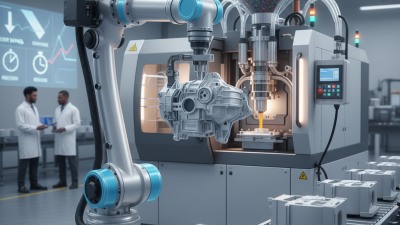
Small volume injection molding is becoming a practical bridge between prototypes and stable production. It suits medical housings, electronic enclosures, appliance parts, and specialized consumer products. These projects often need hundreds or several thousand parts, not millions. That changes the buying decision. Tooling speed, mold cost, material control, and inspection discipline matter more than headline machine capacity.
Grand View Research valued the global injection molding machine market at approximately USD 15.61 billion in 2023. It also forecasts a 4.6% compound annual growth rate from 2024 to 2030. Deloitte’s 2024 Smart Manufacturing and Operations Survey found that 86% of manufacturing executives expect smart manufacturing investment to remain important for competitiveness. These figures describe broader markets, not small-batch molding alone. That limitation deserves attention. Still, they show why data visibility and process consistency increasingly influence supplier selection.
Robert A. Malloy, author of Plastic Part Design for Injection Molding, offers a useful principle: “The design of the part is the first step in the injection molding process.” The quote is simple. Its consequences are not. A thin rib, an uneven wall, or an overlooked draft angle can create rework, sink marks, or difficult ejection. Our selection of the seven best manufacturers therefore considers engineering support, tooling transparency, resin expertise, quality documentation, and realistic lead times. Prices matter, but the cheapest quotation can become expensive after design changes. We also recognize an uncomfortable point: no supplier is ideal for every project. The right choice depends on volume, tolerance, material, certification needs, and how quickly the product must reach customers.
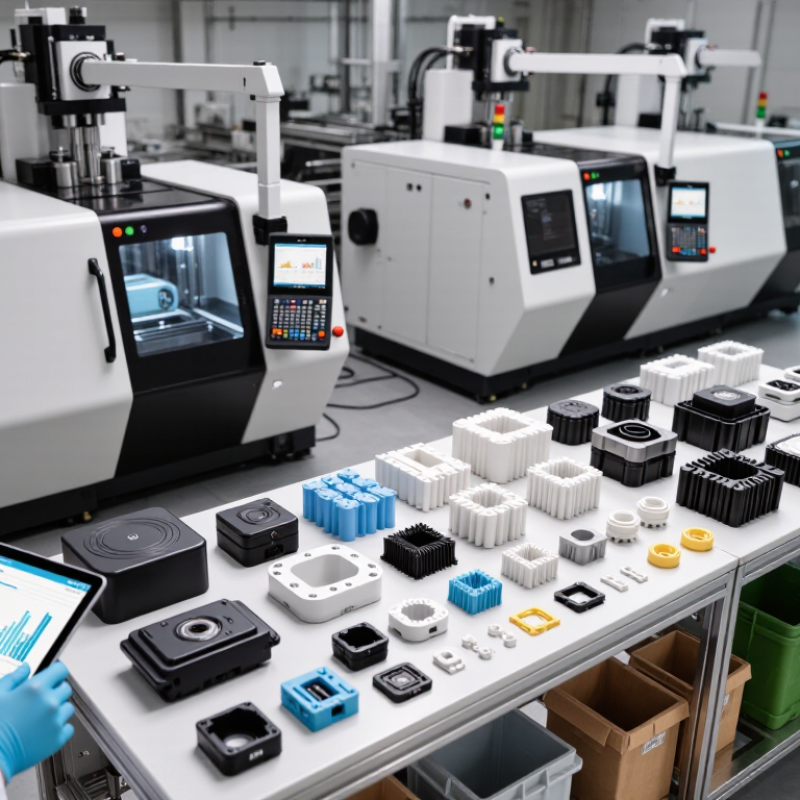
Small volume injection molding produces a limited number of plastic parts using a production-grade mold. It suits prototypes, pilot runs, replacement parts, and early product launches. There is no universal quantity limit. Some projects need 50 pieces, while others require 10,000. The practical boundary depends on tooling cost, material, geometry, and delivery time.
This process differs from 3D printing. Molten resin enters a mold under pressure, then cools into repeatable parts with consistent surfaces. A recent Grand View Research report estimates the global injection molding machine market reached about USD 15.6 billion in 2023. That figure shows the process remains highly relevant, even when production volumes are modest. However, low volume does not always mean low cost. Complex slides, tight tolerances, and polished finishes can make tooling expensive. In my experience, teams sometimes request steel molds too early. That choice may improve durability, but it can weaken the project’s financial logic.
Tips: Confirm the expected lifetime quantity before selecting mold steel. Ask for a design-for-manufacturing review. Check wall thickness, draft angles, cooling, and gate locations. Keep resin grades documented. The wrong material can change shrinkage and surface texture. Also, request first-article measurements, not only photographs. ISO 20457 provides useful guidance for injection-molded plastic parts, but real validation still matters. Small volumes deserve careful control. Errors are less visible in spreadsheets than in finished parts.
Choosing among seven small volume injection molding manufacturers requires more than comparing online prices. Start with process fit. Ask whether the supplier has experience with your resin, part size, wall thickness, and expected quantity. A capable manufacturer should explain mold design choices in clear language, not hide behind technical terms. Request recent sample parts with visible inspection data, including dimensions, surface finish, and defect rates.
Review the tooling plan carefully. Confirm who owns the mold, how maintenance is handled, and how design changes affect cost. Ask for a realistic timeline covering design review, mold fabrication, testing, and delivery. Short runs can expose weak process control. Check whether the supplier uses documented work instructions, material lot tracking, and calibrated measuring equipment. A polished website proves little. The paperwork matters more.
Communication also reveals reliability. Notice how quickly the manufacturer identifies risks, such as sink marks, warping, or difficult ejection. Ask for a formal quotation with assumptions clearly stated. Compare unit pricing, setup fees, shipping, inspection, and revision costs. Independent quality certifications can support credibility, but verify their scope and validity. Do not choose the cheapest quote automatically. I have seen low initial prices become expensive after repeated corrections. Your evaluation may still miss something; that is why a small pilot order and approval sample are valuable.
Seven Leading Small Volume Injection Molding Manufacturers
Small volume injection molding requires more than a capable machine. It demands careful tooling choices, stable process control, and clear communication. The seven leading manufacturers usually share these practical strengths: rapid prototype support, low-volume production, mold-flow analysis, tight dimensional inspection, certified material handling, flexible engineering changes, and dependable delivery planning. Each capability matters when a project needs only a few hundred or several thousand parts.
Experienced manufacturers often begin with a design-for-manufacturing review. They check wall thickness, draft angles, ribs, gates, and likely shrinkage before cutting steel. Some use aluminum molds for faster development, while others recommend hardened tooling for repeated production. Reliable suppliers also document resin batches, molding temperatures, inspection results, and corrective actions. Ask for sample parts. Measure them independently.
The best choice depends on part geometry, material, tolerance, and schedule. A supplier experienced with medical housings may not excel with soft elastomers or glass-filled polymers. That difference is easy to overlook. I have seen projects lose time because early samples looked acceptable but warped after cooling. A strong manufacturer should explain that risk plainly, not hide it behind impressive equipment lists. Pricing also needs careful review, since low tooling cost can conceal higher piece prices, limited mold life, or weak quality support. Seven leading suppliers may appear similar online, yet their engineering discipline becomes visible during quotation, sampling, and production approval.
This chart compares representative tensile-strength ranges for commonly used unfilled thermoplastics in small-volume injection molding. Values are expressed in megapascals (MPa) and reflect typical published material-data ranges; actual performance varies by resin grade, molding conditions, additives, and part design.
Choosing the seven best small-volume injection molding manufacturers requires more than comparing hourly rates. Capability comes first. Check whether each supplier offers aluminum or hardened-steel tooling, insert molding, overmolding, texture control, and dimensional inspection. A supplier making 5,000 parts may not handle glass-filled nylon reliably. Material selection also changes everything. PP keeps cost low, ABS supports durable housings, while PC, PA, and POM improve strength or wear resistance. The 2024 Grand View Research market analysis identifies automotive, electronics, and medical products as major injection molding applications, where resin traceability and process control matter greatly.
Cost comparisons should separate mold design, tooling, resin, machine time, finishing, inspection, and freight. A cheap tool can create expensive corrections. For small batches, aluminum tooling often reduces initial investment, while steel tooling may offer longer life and better repeatability. Practical supplier benchmarks commonly place prototype-to-production lead times around two to eight weeks, depending on geometry and approval speed. The 2024 Wohlers Report also highlights hybrid tooling and additive methods as useful for faster development, although these methods are not ideal for every resin or tolerance.
Ask each of the seven candidates for the same drawing package and quantity forecast. Compare quoted lead time with actual capacity, not optimistic promises. Request sample reports showing shrinkage, warpage, and first-article measurements. A perfect ranking is impossible. That assumption often fails. Supplier expertise, communication, and corrective-action history can outweigh a small price difference. Plastics Industry Association economic data also shows how strongly resin pricing and manufacturing demand fluctuate, so quotes should include validity dates and material substitutions.
Choosing among the 7 best small volume injection molding manufacturers requires more than comparing prices. Your ideal partner should understand your part, material, tolerance, and production target. Ask whether the manufacturer has experience with similar components, such as a 5,000-piece medical housing or a compact automotive clip.
Review the complete process. A reliable manufacturer should explain mold design, material selection, sampling, inspection, and delivery schedules clearly. Request a detailed quotation with tooling costs separated from unit prices. Examine sample parts under normal lighting. Check flash, warping, sink marks, surface texture, and dimensional accuracy. A capable supplier should provide inspection records and explain how rejected parts are handled. Good communication matters. If technical questions receive vague answers, production risks may increase.
Tips: Send a complete 3D model, 2D drawing, material requirement, annual volume, and critical dimensions. Ask for a design-for-manufacturing review before approving the mold. Confirm who owns the tooling and how revisions are priced. Do not select the lowest quote automatically. It may exclude testing, packaging, or mold maintenance. A polished presentation can still hide weak process control. Allow time for corrections. This part is often underestimated. Also, challenge your own assumptions. The fastest supplier may not provide the most stable quality, and a small order still deserves documented inspection.
| Manufacturer Profile | Typical Production Focus | Common Order Volume | Suitable Mold Approach | Typical Materials | Typical Lead-Time Target | Key Capability to Verify | Best Fit |
|---|---|---|---|---|---|---|---|
| 1. Rapid-Prototyping Specialist | Fast design validation and functional prototype parts | 10–500 parts per design iteration | Aluminum or other rapid-turn tooling for limited runs | ABS, PC, PC/ABS, nylon, PP, and TPE | Approximately 2–6 weeks | DFM review, material traceability, and dimensional inspection reports | Product teams testing fit, form, and function before production tooling |
| 2. Bridge-Production Specialist | Interim production before a high-volume manufacturing launch | 500–10,000 parts | Soft tooling or simplified production tooling | Engineering-grade thermoplastics selected for end-use performance | Approximately 4–8 weeks | Repeatability, process documentation, and capacity planning | Companies managing demand between prototype approval and mass production |
| 3. Precision-Component Specialist | Small, tight-tolerance parts for technical assemblies | 100–5,000 parts | Precision steel or hardened inserts where appropriate | Glass-filled nylon, POM, PC, PBT, and other engineering resins | Approximately 5–10 weeks | Coordinate-measuring-machine inspection, tolerance analysis, and process capability data | Components requiring consistent dimensions and reliable assembly performance |
| 4. Overmolding and Insert-Molding Specialist | Multi-material parts and molded components around inserts | 250–10,000 parts | Multi-stage tooling with insert-location and shutoff controls | Rigid thermoplastics combined with TPE, TPU, or elastomers | Approximately 6–12 weeks | Insert positioning, bond strength, flash control, and operator poka-yoke systems | Grips, seals, cable assemblies, housings, and ergonomic products |
| 5. Medical and Laboratory-Component Specialist | Controlled production of non-sterile or regulated plastic components | 500–25,000 parts, depending on validation requirements | Production tooling designed for repeatability and cleanability | Medical-grade or application-specific PP, PC, ABS, PEEK, and other validated resins | Approximately 8–16 weeks | Quality-system certification, lot traceability, validation records, and controlled documentation | Laboratory equipment and medical products requiring documented quality controls |
| 6. Cosmetic-Housing Specialist | Visible housings, consumer products, and appearance-critical parts | 500–20,000 parts | Polished, textured, etched, or appearance-controlled tooling | ABS, PC/ABS, PMMA, PC, PP, and reinforced plastics | Approximately 6–12 weeks | Color matching, gloss measurement, surface inspection, and cosmetic acceptance standards | Consumer electronics, appliances, instruments, and branded product enclosures |
| 7. Full-Service Small-Batch Partner | Design support, tooling, molding, secondary operations, and assembly | 100–25,000 parts | Tooling selected according to expected volume, geometry, and material | Commodity and engineering thermoplastics, including flame-retardant grades | Approximately 4–14 weeks | Single-point project management, supplier controls, inspection planning, and logistics | Teams seeking one accountable partner for multiple manufacturing steps |
The volume and lead-time ranges shown are common planning benchmarks for small-volume injection molding, not guaranteed quotations. Confirm actual capacity, tooling material, resin availability, quality certifications, inspection methods, and delivery dates with each shortlisted manufacturer.