China’s injection-molding market spans precision components, consumer goods, automotive parts, and medical-device manufacturing. This guide introduces ten suppliers serving different needs. It is not a universal ranking. A strong fit depends on the part, production volume, material, tooling requirements, and quality controls.
John Beaumont, an injection-molding author and engineer, offers a useful principle in his technical work: treat the mold, material, machine, and process as one connected system. This is a paraphrase, not a verbatim quotation. It matters when comparing suppliers. A capable factory should explain how it controls melt temperature, injection pressure, cooling time, and dimensional variation—not just show polished sample parts.
The profiles below consider manufacturing experience, equipment, engineering support, quality practices, and communication. Buyers should also ask for relevant case studies, sample inspection reports, and clear details about tooling ownership and production lead times. A close-up of a molded part can reveal sink marks or flash. A measurement report can show whether critical dimensions stay within agreed tolerances. Small details matter.
No supplier suits every project. A large production line may not serve a low-volume prototype well, and an attractive quote may omit important tooling or inspection costs. Some information may also change; verify it directly. This comparison is a starting point, not a substitute for technical review. The plastic injection molding process rewards careful questions, and sometimes the right choice is less obvious than the brochure suggests.
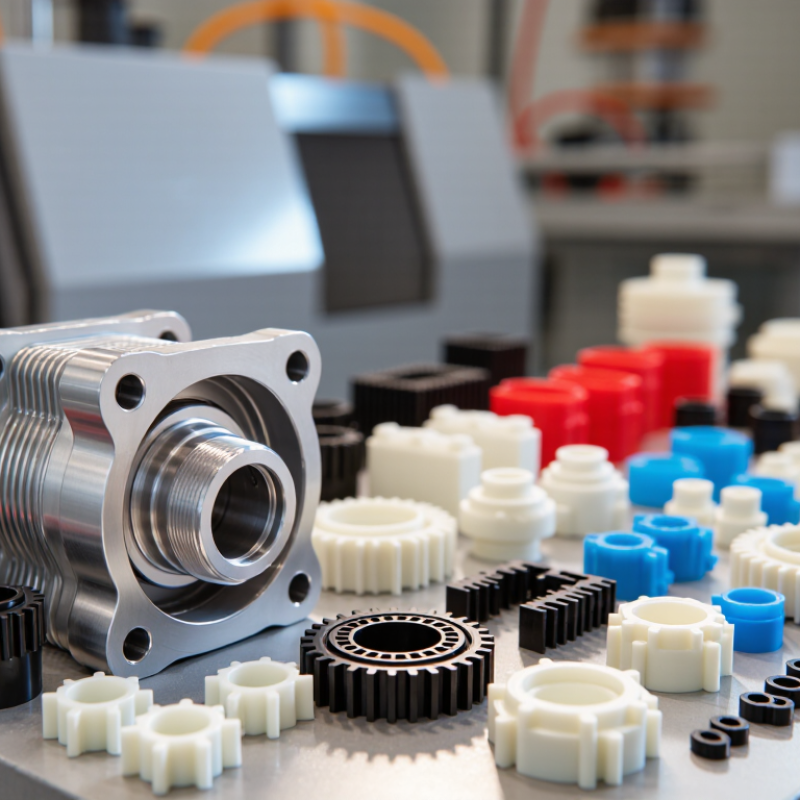
China’s plastic injection molding industry sits within a vast plastics-processing base. The National Bureau of Statistics reported 74.885 million tonnes of plastic-product output in 2023, down 3.9% year on year. This measure covers plastic products broadly, not injection molding alone. That distinction matters. Across manufacturing clusters, molding shops often coordinate tooling, resin drying, molding, and finishing. On the factory floor, moisture levels, mold temperature, and cooling time can affect part dimensions and surface quality. Small adjustments matter.
Demand comes from sectors such as electronics, automotive, household goods, and packaging, each with different requirements for strength, appearance, and production consistency. A supplier’s press capacity is only one part of the picture. Buyers should also examine mold maintenance routines, inspection records, and how defects are handled between production runs. These details can reveal more than a capacity figure. China’s scale supports broad production options, but it does not guarantee uniform process control. Even a well-specified part may need trial runs and careful measurement before full production.
When comparing China’s top plastic injection molding suppliers, judge the process, not just the quotation. Share a detailed drawing and ask how the supplier checks wall thickness, draft angles, and shrinkage risks. A capable engineering team should identify likely defects before cutting the mold. Ask for a mold-flow review when the part’s shape or material makes filling uncertain.
Check whether the factory can match your resin, part size, and expected order volume. Review machine clamping force, shot capacity, and mold maintenance records. Request a sample inspection report showing critical dimensions, measurement tools, and actual results. Ask how operators control resin drying, machine settings, and material batches. Small details matter. A polished sample proves little if production settings drift between shifts.
Use outside data as context, not as a substitute for an audit. Plastics Europe’s Plastics—The Fast Facts 2023 reports 400.3 million tonnes of global plastics production in 2022, underscoring the scale of material supply. The OECD’s Global Plastics Outlook (2022) estimates that only 9% of plastic waste was recycled in 2019. Ask suppliers how they track scrap, handle regrind, and maintain resin traceability. Then verify their answers on the shop floor. A tidy checklist can still miss a weak process; that is worth admitting. Look for documented corrective actions and repeatable results, not promises alone.
China’s injection molding suppliers are not interchangeable. These ten profiles show the capabilities buyers may encounter, rather than a verified ranking. A precision-parts supplier may focus on tight tolerances, cavity balance, and measured inspection reports. An automotive-focused shop often handles durable housings and repeat production. Ask how it tracks resin batches. Details matter.
A medical-parts supplier should explain its cleanliness controls and document practices clearly. An electronics specialist may offer thin-wall molding and insert molding for compact enclosures. A packaging producer typically prioritizes fast cycles and consistent wall thickness. Large-part suppliers need suitable presses, floor space, and careful handling. Overmolding shops combine materials, but bonding tests are essential. Prototype-focused suppliers can refine gate placement and draft angles before tooling is finalized. Turnkey suppliers may coordinate mold design, sampling, and assembly. Household-goods producers often balance appearance with practical unit costs. A factory tour can help, but it proves little by itself. Request sample parts, process records, and clear answers about defects. Some suppliers describe broad capabilities; actual experience may be narrower. That deserves a second look.
The entries below are anonymous capability profiles for comparing supplier types, not verified company rankings or company-specific specifications. Actual machine ranges, materials, certifications, and services vary by factory and should be confirmed directly.
| Profile | Typical Project Focus | Common Materials | Relevant Processes | Industries Commonly Served | Key Details to Verify |
|---|---|---|---|---|---|
| Profile 1 — Precision Components | Small, dimensionally demanding molded parts | ABS, PC, POM, PA, PBT | Precision injection molding; dimensional inspection | Electronics, instruments, automotive components | Part tolerances, measurement methods, process capability data |
| Profile 2 — Automotive Parts | Functional interior, exterior, and under-hood components | PP, ABS, PC/ABS, PA, POM | Injection molding; insert molding; assembly options may be available | Automotive and mobility | Automotive quality-system certification, traceability, validation requirements |
| Profile 3 — Electronics Housings | Enclosures, covers, connectors, and consumer-device parts | ABS, PC, PC/ABS, PA, flame-retardant grades | Injection molding; texture and cosmetic finishing options | Consumer electronics, electrical equipment, telecom | Resin grade, flammability requirements, color and surface standards |
| Profile 4 — Medical and Laboratory Products | Non-implantable device components and laboratory consumables | PP, PE, PC, ABS, medical-grade elastomers | Injection molding; clean production may be offered by some facilities | Medical devices, diagnostics, laboratory equipment | Applicable quality systems, cleanroom classification, material documentation |
| Profile 5 — Consumer Products | High-volume, appearance-focused household and lifestyle parts | PP, ABS, HIPS, PC/ABS, TPE | Injection molding; decorating and assembly may be available | Homeware, appliances, personal products | Color matching, cosmetic defect criteria, production capacity and lead time |
| Profile 6 — Packaging Components | Closures, caps, containers, and thin-wall packaging parts | PP, PE, PET and other application-appropriate resins | Injection molding; high-cavitation tooling may be used for volume work | Food, beverage, personal care, household products | Food-contact compliance where required, cycle time, cavity count, leak testing |
| Profile 7 — Overmolding and Insert Molding | Parts combining rigid plastics with elastomers or embedded inserts | PP, PC, ABS, PA, TPE, TPU | Two-material overmolding; insert molding, subject to equipment and tooling | Automotive, tools, electronics, consumer products | Material compatibility, bond strength, insert positioning and inspection |
| Profile 8 — Large-Part Molding | Larger housings, panels, bins, and structural plastic parts | PP, PE, ABS, PC/ABS, glass-fiber-reinforced grades | Large-part injection molding; machine capacity is facility-specific | Automotive, appliances, industrial equipment, logistics | Maximum mold size, clamping force, shot capacity, lifting and handling limits |
| Profile 9 — Tooling and New-Product Development | Projects requiring mold design, sampling, and production launch support | Material selected to meet the part’s mechanical, thermal, and regulatory needs | Mold design and build; trial molding; production molding | Start-ups, OEMs, industrial and consumer-product developers | Tool ownership, mold maintenance, sample approval, engineering-change process |
| Profile 10 — Integrated Contract Manufacturing | Molded parts supplied with secondary operations or finished-product assembly | Thermoplastics selected for the part and end-use requirements | Injection molding; optional finishing, assembly, packaging, and testing | Electronics, appliances, medical products, industrial goods | Scope of in-house work, subcontracting controls, inspection plans, delivery terms |
A useful comparison of China’s top ten plastic injection molding process suppliers starts with production evidence, not a polished brochure. Ask about machine clamp force, shot size, and documented tolerances for your part. A supplier making thin electronic housings may not be suited to thick, load-bearing components. Request sample inspection records and examine gate marks, warpage, and dimensions after cooling. Small details matter.
Material capability can vary widely. Confirm which grades a supplier routinely processes, such as ABS, polypropylene, nylon, or polycarbonate, and ask how it manages drying and temperature control. These steps affect appearance and dimensional stability. Also check whether color matching, inserts, or overmolding are available. A long material list proves little without relevant production experience. One overlooked issue: a resin substitution can change fit.
Industry experience helps reveal how well a supplier handles real production demands. Automotive, medical, consumer, and industrial parts may require different levels of traceability, testing, and process control. Ask for examples of similar part geometries, typical inspection methods, and how defects are recorded. A spreadsheet can make every factory look equally capable. It cannot. Compare response quality, tooling support, lead-time assumptions, and willingness to discuss risks; even a good supplier may not fit every project.
Typical melt-processing temperature ranges for commonly injection-molded plastics. Ranges vary by resin grade and supplier recommendations; this chart is material reference data, not a ranking of individual suppliers.
When comparing suppliers, confirm their experience with the required resin, tooling, tolerances, and end-use industry, and request grade-specific processing guidance.
China Top 10 Plastic Injection Molding Process Suppliers
Key Considerations for Selecting a Chinese Supplier
Choosing a Chinese injection molding supplier means checking process control, not just comparing unit prices. Grand View Research estimated the global injection-molded plastics market at USD 284.4 billion in 2023, with projected growth through 2030. This scale makes supplier capability important. Ask how the factory controls resin drying, mold temperature, and cycle time. These details affect visible defects, dimensions, and delivery consistency.
Review recent inspection records and request a sample made with the intended resin and mold. Confirm who owns the mold, how maintenance is logged, and whether material batches can be traced. A capable supplier should explain measurement methods and provide dimensional results against your drawing. Also compare quotations carefully: tooling, packaging, inspection, and shipping assumptions can differ. A low quote may omit real costs. A polished brochure proves little.
Tips: Ask for evidence. Request photos of the production line, a sample inspection report, and a clear corrective-action example. Check response times during technical discussions; slow or vague replies can signal future friction. Remote review has limits, though. A video call cannot reveal every shop-floor problem.