
10 Plastic Injection Molding Tips for Global Buyers
Global buyers entering plastic injection procurement face a market shaped by scale, complexity, and rising accountability. The OECD’s Global Plastics Outlook reports that global plastic production reached 460 million tonnes in 2019, doubling since 2000. PlasticsEurope also recorded approximately 400 million tonnes of global plastics production in 2022. These figures show the opportunity. They also expose the pressure on sourcing teams.
A reliable supplier must offer more than an attractive unit price. Buyers should examine mold steel, resin traceability, process validation, cavity balance, inspection methods, packaging, and shipping protection. A sample part may look perfect under bright factory lights. It can still fail after temperature cycling or repeated assembly. John Bozzelli, founder of Scientific Molding, has repeatedly emphasized that injection molding is “a science, not an art.” That principle matters when comparing suppliers across countries.
The following ten plastic injection tips translate technical risks into practical buying decisions. They address design reviews, tooling ownership, material selection, quality evidence, communication, and landed cost. They also encourage buyers to question assumptions. A cheaper mold is not always economical. A familiar resin is not automatically suitable. Even a strong supplier can miss a tolerance without clear drawings and measurable acceptance criteria. Some recommendations may feel obvious. In practice, they are often skipped when deadlines become urgent. Better sourcing begins with details that can be checked, documented, and repeated.
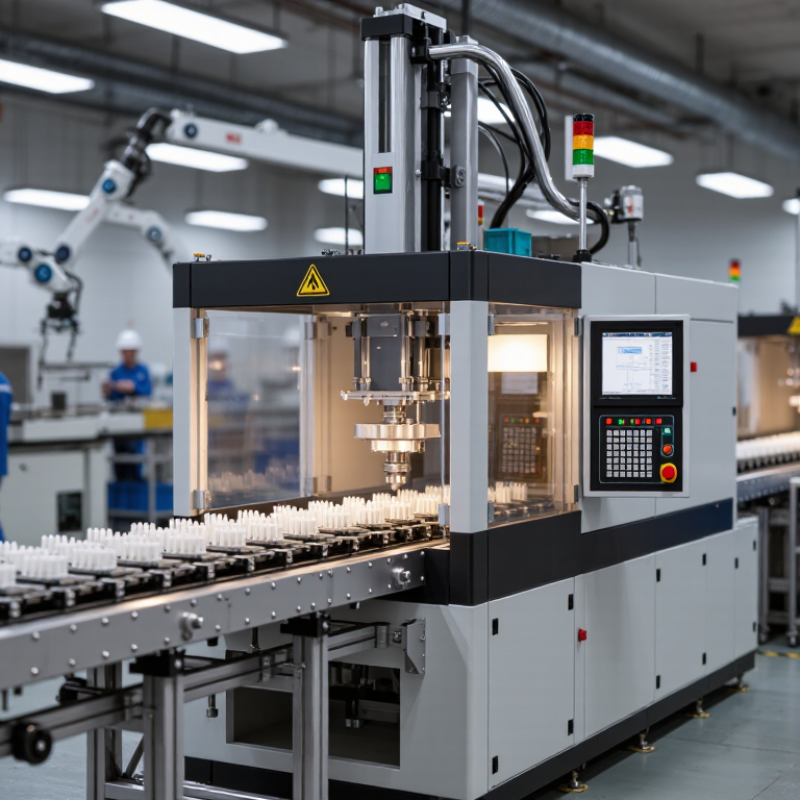
Table of Contents
[Hide]
Choosing the Right Plastic and Injection Molding Process
Choosing the Right Plastic and Injection Molding Process
Global buyers should match the resin to the part’s real working conditions. Start with temperature, chemical exposure, impact, stiffness, and outdoor use. Check shrinkage data before approving the mold. Material designations should follow ISO 1043 where applicable. PlasticsEurope reported 413.8 million tonnes of global plastic production in 2023. That scale hides major differences between resin families. Commodity plastics may suit housings, while engineering grades support heat, load, or dimensional demands. Recycled content can reduce virgin material use, but it may increase color variation and batch-to-batch inconsistency. Test it.
Process selection matters just as much. Standard injection molding fits repeatable, medium-to-high volumes. Thin-wall molding can reduce weight, but it needs accurate flow analysis and tighter process control. Insert molding reduces assembly steps, although mismatched thermal expansion can create cracks. Gas-assisted molding may lower sink marks in thick sections. A reputable supplier should provide mold-flow results, material certificates, sample measurements, and traceability records. Ask about gate location, cooling channels, cycle time, and expected scrap. The International Energy Agency notes that industrial efficiency depends heavily on equipment, process control, and operating conditions. Energy data alone cannot prove a better process. One overlooked detail is often part ejection. Poor draft angles can damage surfaces and quietly raise costs. My own recommendation is imperfect: approve production only after testing the actual resin, mold, and intended environment together. A datasheet is not a finished part.
10 Plastic Injection Molding Tips for Global Buyers - Choosing the Right Plastic and Injection Molding Process
| # | Buyer Tip | Selection Dimension | Practical Data and Typical Values | Recommended Process or Material | Global Purchasing Check |
|---|---|---|---|---|---|
| 1 | Define the service environment first | Temperature, chemicals, moisture, UV exposure and mechanical load | Common engineering plastics cover approximately -40°C to 120°C for continuous use, while high-temperature grades can exceed 150°C. Actual limits depend on load, exposure time and grade. | Use PP or HDPE for many chemical and moisture applications; consider PA, POM, PC or high-temperature polymers for demanding mechanical or thermal conditions. | Request the exact grade, technical datasheet and test conditions rather than accepting only a generic resin name. |
| 2 | Match material stiffness to the load | Tensile strength, flexural modulus and impact resistance | Unfilled PP typically has a flexural modulus near 1.0–1.7 GPa; glass-fiber-reinforced grades commonly reach about 5–12 GPa, depending on fiber content and grade. | Choose unfilled materials for flexibility and lower cost; use short-glass-fiber compounds when higher stiffness and dimensional stability are required. | Confirm whether the quoted mechanical data is measured at room temperature, at the operating temperature or after conditioning. |
| 3 | Check shrinkage and dimensional tolerance | Mold shrinkage, warpage and tolerance requirements | Typical linear molding shrinkage is approximately 0.4–2.0%, varying with resin, geometry, flow direction, packing pressure and cooling conditions. | Use dimensional simulation and balanced cooling for tight-tolerance parts; mineral or glass-filled materials may reduce shrinkage but can increase anisotropy. | Specify critical dimensions, measurement method, sampling plan and acceptable tolerance before tooling begins. |
| 4 | Design wall thickness for reliable filling | Wall uniformity, flow length and sink-mark risk | Many general-purpose injection-molded parts use wall sections around 1.5–3.0 mm. Very thin walls require suitable flow length, material selection and injection capability. | Keep walls as uniform as practical; transition gradually between thicknesses and core out bulky sections to reduce sink marks and internal stress. | Ask for a manufacturability review and filling analysis before final mold design. |
| 5 | Select the process according to volume | Annual quantity, tooling investment and cycle time | Injection molding usually becomes more economical as production volume increases because tooling cost is distributed across many parts. Cycle times commonly range from several seconds to over one minute. | Use production injection molding for repeatable medium-to-high volumes; consider bridge tooling or additive manufacturing for prototypes and small batches. | Compare total landed cost: tooling, unit price, inspection, packaging, freight, duties and expected maintenance. |
| 6 | Account for material drying | Moisture sensitivity and hydrolysis risk | PA, PC, PET and PBT can absorb moisture. Excess moisture may cause splay, bubbles, reduced molecular weight or lower mechanical performance during molding. | Use controlled dehumidifying drying for moisture-sensitive resins; follow the resin supplier's specified temperature, time and maximum moisture level. | Require records for resin storage, dryer temperature, drying duration and moisture verification. |
| 7 | Choose the correct gate and runner layout | Flow balance, weld lines, cosmetic quality and material waste | Cold runners create additional runner scrap, while hot runners can reduce waste but add tooling complexity, maintenance requirements and initial cost. | Use a balanced runner system; select edge, pin, submarine or valve-gate layouts based on geometry, appearance and automation needs. | Confirm gate location, vestige allowance, runner type and provisions for future color or material changes. |
| 8 | Provide adequate draft angles | Part release, surface texture and ejection force | A common starting point is approximately 0.5°–1° per side for smooth surfaces, with additional draft often needed for deep textures, long cores or tight shrink-fit conditions. | Increase draft for textured surfaces and deep ribs; use properly positioned ejector pins to reduce whitening, distortion and sticking. | Document texture grade, draft assumptions and ejection marks in the approved drawing. |
| 9 | Evaluate secondary operations early | Threads, inserts, painting, plating, welding and assembly | Threaded inserts can improve repeated fastening performance; ultrasonic welding generally requires compatible joint geometry and controlled energy input. | Use molded threads for suitable plastics and low assembly loads; use inserts or overmolding when higher torque, wear resistance or metal integration is needed. | Include assembly fixtures, process capability, corrosion requirements and repair or replacement procedures in the quotation. |
| 10 | Build compliance and quality controls into the specification | Traceability, restricted substances, safety and inspection | Requirements may include dimensional inspection, material certificates, lot traceability, flammability testing, food-contact suitability or electrical safety testing, depending on the end use and destination. | Specify the required regulatory framework, approved material family, colorant restrictions, inspection standard and corrective-action process. | Request first-article samples, control plans, batch records, test reports and agreed acceptance criteria before mass production. |
Note: Values shown are general engineering ranges for preliminary comparison. Final material and process decisions should be validated against the specific resin datasheet, part geometry, operating environment and applicable destination-market requirements.
Related Posts
-

Why Plastic Injection Molding is Essential for Modern Manufacturing Success
-

Innovative Uses of Plastic Injection Molding in Sustainable Product Design
-

Top 10 Plastic Injection Suppliers in China for Global Buyers?
-

Transform Your Production Line: The Ultimate Guide to Rapid Injection Molding Techniques
-

Top 10 Benefits of Plastic Injection Molding Process for Buyers?
-
7 Best Small Volume Injection Molding Manufacturers?