What Are the Top Types of Plastic Molding?
Plastic molding turns small polymer pellets into parts that must fit, seal, flex, or withstand heat. The choice of process shapes the part’s cost, finish, strength, and production speed. It also affects material waste. The details matter.
The OECD’s Global Plastics Outlook reports that global plastics production reached 460 million tonnes in 2019, up from 234 million tonnes in 2000. That scale makes process selection more than a shop-floor decision. It influences material use and the options available at a product’s end of life. The figures describe the plastics industry broadly, not molding alone, so they should not be read as molding-specific estimates.
As polymer-processing expert Tim A. Osswald and coauthors put it, “Polymer processing is the science and technology of transforming polymers into useful products.” Their framing helps explain why no single method suits every design. Injection molding can produce detailed parts in high volumes. Blow molding forms hollow containers. Extrusion creates continuous profiles, while compression and rotational molding serve other shapes and production needs.
No method wins every job. A thin-walled component may favor injection molding, while a large hollow tank may call for rotational molding. Tooling cost, resin choice, wall thickness, and expected volume all matter. Even experienced teams can misjudge a trade-off. This guide compares the top types of plastic molding, showing how each process works, where it fits, and what limitations deserve a closer look.
Injection Molding: Producing Detailed Parts in High Volumes
What Are the Top Types of Plastic Molding?
Injection Molding: Producing Detailed Parts in High Volumes
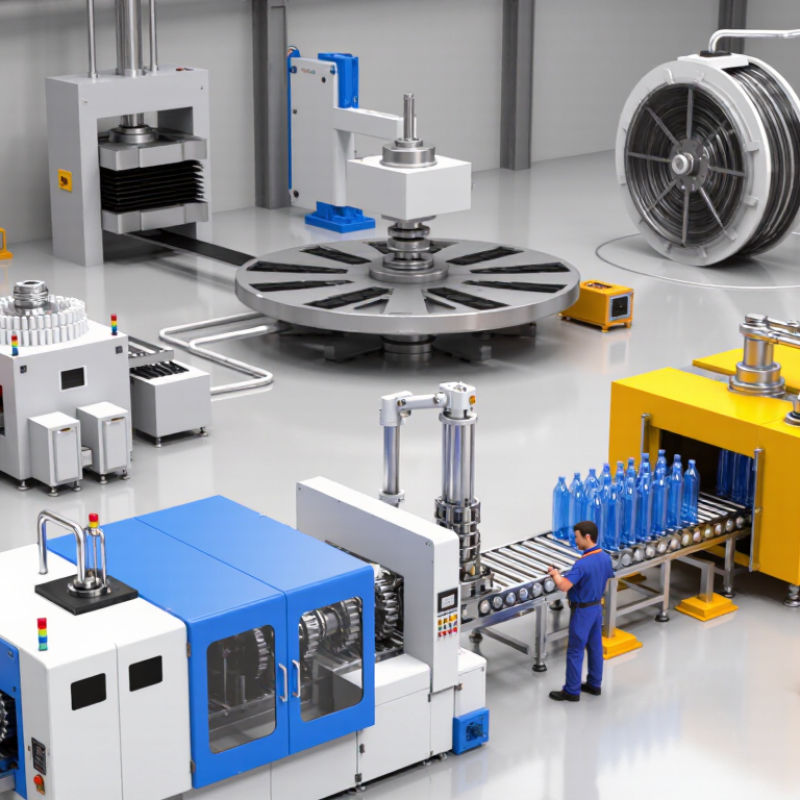
Injection molding suits parts that need consistent dimensions, fine details, and repeatable production. Plastic pellets melt inside a heated barrel, then enter a closed mold under pressure. After cooling, the part is released. Think of a small gear: its teeth and central bore can be formed in one cycle. The tooling takes time and money to build, but each additional part can become less costly at scale. The fit is precise. Sometimes, though, a design needs more adjustment than expected.
Grand View Research estimated the global injection molding market at about $284.5 billion in 2023 and projected growth through 2030. That figure describes a broad market, not a guarantee that injection molding is right for every product. The process can handle many thermoplastics and produce complex shapes, but wall thickness, draft angles, and gate placement affect quality. Poor choices may lead to sink marks, warping, or visible flow lines. A mold trial can reveal issues before full production, yet even experienced teams may need revisions.
Tips: Check that walls are reasonably uniform and add draft where parts meet mold surfaces. Ask for a production sample, not just a drawing review. Confirm the resin, expected volume, and acceptable cosmetic defects before approving tooling.
Extrusion Molding: Forming Continuous Plastic Profiles
Extrusion molding forms plastic into a continuous profile by pushing softened material through a shaped die. Unlike processes that make one part at a time, it produces long lengths of tubing, trim, sheet, or channels. A screw inside a heated barrel moves pellets forward, melts them, and presses the melt through the die. The profile then cools in a water bath or calibrated unit before being pulled and cut. Small die changes matter. Cooling and pull speed affect dimensions, surface finish, and whether thin walls twist.
This process suits products with a consistent cross-section, such as window seals, pipes, and cable covers. Material choice, melt temperature, and die design must work together; a setting that helps one resin may cause another to sag or develop a rough surface. Operators monitor dimensions during production and adjust the line when readings drift. In practice, a profile may need another trial before it holds its shape reliably. That extra work is easy to underestimate.
Tips: Check wall thickness at several points, not just one. Watch for uneven color, rough edges, or bowing as the profile cools. Keep a record of temperature and pull-speed changes; it makes troubleshooting more useful later.
Blow Molding: Creating Hollow Plastic Products
Blow molding creates hollow plastic parts by inflating softened plastic inside a shaped mold. It is commonly used for bottles, tanks, ducts, and other enclosed forms. In extrusion blow molding, a warm plastic tube, called a parison, hangs between open mold halves. The mold closes, and compressed air expands the tube against the mold walls. Cooling sets the shape. The part is then trimmed and checked for leaks or uneven walls. The basic steps sound simple.
Different methods suit different designs. Extrusion blow molding handles many containers, while injection blow molding can produce precise neck finishes. Stretch blow molding is often chosen for lightweight bottles that need good clarity and strength. Wall thickness, material choice, and mold temperature all affect the result. A thin corner may cool differently from a thick base. Small design changes can therefore reduce weak spots and wasted material. Even experienced teams may need trial runs; the first sample is not always the best one.
Tips: Keep corners gently rounded and avoid sudden changes in wall thickness. Check the neck and base carefully, since both influence fit and stability. Ask for a sample part before approving production. Look closely at seams, surface marks, and wall consistency.
Rotational Molding: Making Large, Hollow, Seamless Parts
Rotational molding makes large, hollow parts by heating plastic powder inside a rotating mold. The mold turns on two axes, spreading softened material across its inner walls. Once cooled, the part can come out as one continuous shell, without the joining seam common in assembled products. Think of a water tank with smooth, curved walls and molded-in ribs. The process suits kayaks, storage tanks, playground equipment, and protective housings. It handles complex shapes well. That flexibility is useful, but it does not make every design economical.
Grand View Research estimated the global rotational molding market at about US$5.1 billion in 2023 and projected a 4.5% compound annual growth rate from 2024 to 2030. These are market estimates, not proof that a specific part will be cost-effective. Rotomolding typically uses relatively low pressure, but heating and cooling can make production cycles lengthy. Wall thickness also depends on powder distribution, mold design, and process control. Uneven material can leave thin spots where a tank needs strength most. Not a small detail. Designers should check load, UV exposure, and expected service conditions before selecting the process. A seamless part can still warp, and large molds may require substantial space and careful handling.
Compression Molding: Shaping Plastic Under Heat and Pressure
What Are the Top Types of Plastic Molding?
Compression Molding: Shaping Plastic Under Heat and Pressure
Compression molding places a measured charge of plastic into a heated mold. A press closes the halves, forcing material into the cavity. Heat softens or cures it; pressure helps shape the part. A heavy press closes. The method suits thermosets, rubber, and some composite materials, especially for broad, sturdy components such as electrical housings and vehicle panels.
PlasticsEurope’s Plastics – the Fast Facts 2023 reports 400.3 million tonnes of plastics produced worldwide in 2022. That figure describes the wider materials industry, not compression molding alone. Grand View Research’s 2024 compression-molding market report forecasts market growth through 2030, reflecting continued industrial interest. In production, cycle time depends on material, part thickness, and cure requirements. Flash can form at the mold edges, so operators must check charge size and mold condition. This part is easy to underestimate.
Tips: Keep the material charge consistent, and preheat it only when the material specification allows. Watch pressure, temperature, and cure time together; adjusting one alone may leave weak spots or uneven surfaces. A small test run can reveal trouble before a full batch.
Compression Molding: Typical Mold Temperature Ranges
Compression molding shapes plastic by applying heat and pressure in a mold. These approximate temperature ranges are common starting points for selected thermoset materials; exact settings depend on the compound and should be confirmed with its technical data sheet.
The bars show approximate low-to-high mold temperatures in degrees Celsius, not guaranteed production settings.