
How to Choose Low Volume Injection Moulding in 2026?
Choosing low volume injection moulding in 2026 is not simply a search for the cheapest tooling quote. It is a production decision shaped by part design, material choice, quantity, tolerance, and launch timing. A team may need 300 sensor housings for field testing, or 2,000 brackets before full-scale production begins. In both cases, the moulding method must provide repeatable parts without creating unnecessary tooling expense. Small details matter. Gate marks, sink areas, warpage, and difficult ejection can quickly affect assembly and customer confidence.
This guide explains how to compare low volume injection moulding suppliers, tooling options, and production methods with practical judgment. It considers aluminium moulds, bridge tooling, rapid tooling, and carefully selected engineering plastics. It also examines quoting, design-for-manufacturing reviews, sample approval, dimensional inspection, and material traceability. A reliable supplier should explain process limits clearly, document trial results, and identify risks before production starts. Quality systems are useful, but certificates alone do not prove consistent workmanship.
The best choice depends on the product’s real purpose. A cosmetic prototype needs different controls from a functional component used in repeated testing. That distinction is often missed. It can be expensive. Buyers should question promised cycle times, tool life, tolerances, and revision costs. They should also confirm safety, environmental, and material requirements for the target market. Some projects need a stronger mould than expected. Others only need disciplined process control and a modest production run. This article offers a practical framework for making that decision, while recognising that no single solution fits every product.
Table of Contents
[Hide]
What Is Low-Volume Injection Moulding?
What Is Low-Volume Injection Moulding?
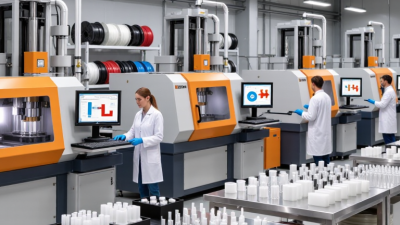
Low-volume injection moulding produces a limited batch of identical plastic parts. Heated resin enters a metal or aluminium mould under pressure. It cools around a repeatable geometry. “Low volume” has no universal cutoff. Suppliers usually define it by project economics, tooling cost, and delivery needs. A prototype may need 50 parts, while a pilot launch may require 5,000. PlasticsEurope’s Plastics—The Fast Facts 2024 reports 413.8 million tonnes of global plastics production in 2023. Even small projects need material control, traceability, and careful scrap management.
This process sits between 3D printing and high-volume tooling. It can provide stronger parts, smoother surfaces, and more consistent dimensions than many printed alternatives. The trade-off is the initial mould investment. Aluminium tooling may reduce lead time, but it can wear faster during repeated cycles. The Wohlers Report 2024 valued the global additive manufacturing market at 20.035 billion US dollars in 2023. This supports hybrid workflows, such as printing early samples before cutting production tooling. Still, the boundary is not fixed. A “small” order can become expensive when design changes arrive late.
Tips: Confirm the annual forecast before selecting tooling. Ask for a mould-flow review and a first-article inspection. Specify resin grade, shrinkage limits, colour, and surface texture. Do not assume low volume means low cost. That assumption often fails. Include spare inserts when future revisions seem likely.
How to Choose Low Volume Injection Moulding in 2026? - What Is Low-Volume Injection Moulding?
| Low-Volume Injection Moulding Dimension | Typical Industry Range or Fact | What It Means | When It Is a Good Choice | Key Selection Considerations |
|---|---|---|---|---|
| Production Quantity | Commonly from approximately 100 to 10,000 parts, depending on part size, material, tooling design, and supplier capability. | Low-volume moulding fills the gap between prototypes and high-volume production. | Pilot production, market testing, replacement parts, and early-stage commercial products. | Confirm the expected lifetime quantity and whether the mould can be modified or reused for future production. |
| Tooling Approach | Aluminium or soft-steel moulds are commonly used instead of hardened production steel for shorter runs. | Lower-cost tooling can reduce the initial investment and shorten the launch schedule. | Projects with limited demand or designs that may change after testing. | Ask about tool life, allowable production cycles, repair options, spare inserts, and storage conditions. |
| Typical Tooling Lead Time | Often about 2 to 6 weeks after design approval, although complex parts and multi-cavity tools may take longer. | Tooling is generally faster than conventional high-volume mould development, but timing is design-dependent. | Products with a defined CAD model and a need for production parts within a short schedule. | Include time for design-for-manufacturing review, mould-flow analysis, tool fabrication, sampling, and approval. |
| Part Cost | Usually higher per part than high-volume moulding because tooling and setup costs are spread over fewer units. | The process trades a higher unit price for lower upfront tooling expenditure. | Applications where avoiding a large initial investment is more important than achieving the lowest unit cost. | Compare total landed cost, including tooling, moulding, material, finishing, inspection, packaging, and freight. |
| Material Compatibility | Many thermoplastics can be used, including common engineering, reinforced, flame-retardant, and medical-grade materials when properly qualified. | Material selection affects strength, temperature resistance, shrinkage, surface finish, and regulatory compliance. | Functional prototypes and end-use parts that require production-grade thermoplastic performance. | Specify the exact resin grade, colour, additives, recycled-content requirements, and relevant compliance documentation. |
| Design Flexibility | Design changes are generally easier and less expensive before final tooling approval; major changes after tool cutting may require rework. | Low-volume tooling is useful when a product is still being optimized, but it is not change-free. | Products undergoing engineering validation, customer feedback, or regulatory review. | Review draft angles, wall thickness, ribs, bosses, undercuts, parting lines, gates, ejector marks, and shrinkage allowances. |
| Cavity Configuration | Single-cavity tools are common for low quantities; multi-cavity tools may be considered when demand and cycle economics justify them. | More cavities can increase output per cycle but also raise tooling complexity and initial cost. | Single-cavity moulds for small batches; multi-cavity moulds for repeat orders with stable demand. | Balance required output, machine capacity, part balance, dimensional consistency, and future volume forecasts. |
| Quality and Repeatability | Production-quality results are achievable when the mould, process parameters, material, and inspection plan are controlled. | Low volume does not automatically mean lower quality, but process validation may be less extensive than for mass production. | Functional parts requiring repeatable dimensions, fit, appearance, and mechanical performance. | Define critical-to-quality dimensions, tolerances, cosmetic limits, first-article inspection, and sampling frequency. |
| Dimensional Tolerance | Practical tolerances depend on material, part size, geometry, mould design, and process control; tighter tolerances usually increase cost. | Material shrinkage and warpage must be considered during design and tool construction. | Parts with clearly identified critical dimensions and realistic tolerance requirements. | Do not apply unnecessarily tight tolerances to every feature; identify functional dimensions separately from non-critical features. |
| Surface Finish | As-machined, textured, polished, etched, and custom cosmetic finishes are possible, subject to tool steel and process limitations. | The mould surface is transferred to the plastic part, so finish requirements should be defined before tooling. | Consumer housings, visible components, functional prototypes, and presentation samples. | Specify gloss level, texture standard, weld-line visibility, gate location, ejector-mark acceptance, and colour consistency. |
| Cycle Time | Often ranges from several seconds to several minutes, depending on part thickness, material, mould temperature, cooling, and automation. | Cooling commonly represents a significant portion of the injection moulding cycle. | Projects where the required batch size can be produced efficiently on an appropriately sized machine. | Evaluate cooling-channel design, wall thickness, machine availability, runner type, automation, and expected hourly output. |
| Best Application Stage | Suitable for engineering validation, design verification, pilot builds, bridge production, and limited commercial release. | It can provide parts made from the intended production material before demand is high enough for mass production tooling. | Companies validating product-market fit before committing to high-volume tooling. | Choose a supplier that can support a later transition to hardened tooling or higher-cavity production if demand increases. |
| Main Advantages | Lower initial tooling cost, shorter development time, production-grade materials, repeatable parts, and reduced inventory risk. | These benefits make the process practical for uncertain or moderate demand. | Projects that need real moulded parts without the financial commitment of mass production. | Prioritize suppliers with strong design-for-manufacturing support, transparent costing, inspection capability, and clear lead times. |
| Main Limitations | Higher unit cost, finite tool life, possible limitations on complex geometries, and less economic efficiency at very high volumes. | Low-volume moulding is not always the best solution for large, stable production demand. | Short-run or uncertain-demand programs rather than continuously high-volume products. | Request a break-even comparison against 3D printing, CNC machining, urethane casting, and high-volume injection moulding. |
| 2026 Selection Checklist | Evaluate quantity, material, part geometry, tolerance, surface finish, launch date, tooling budget, inspection needs, and future demand. | A structured comparison helps prevent choosing a process based only on quoted unit price. | Any project where schedule, product risk, and total cost must be balanced. | Obtain a detailed quotation with tool ownership, revision policy, sampling plan, lead time, quality documentation, and delivery terms. |
Note: The ranges shown are typical planning references rather than universal limits. Actual results vary with part geometry, resin grade, mould construction, machine capability, quality requirements, and supplier process controls.
Related Posts
-

10 Best Small Run Plastic Injection Molding Companies
-
What is low quantity injection molding and its benefits?
-
7 Best Small Volume Injection Molding Manufacturers?
-
How to Make a 3D Printed Injection Mold in 2026?
-

2025 Top Insights on Low Volume Injection Moulding for Efficient Production
-
7 Best Small Run Plastic Injection Molding Companies